




Jewelry making for beginners is best approached by starting with a few essential tools, such as pliers and wire cutters, and affordable materials like glass beads or craft wire to keep initial costs low. Focus on learning fundamental techniques such as beading and simple wire wrapping before investing in precious metals.
Is making jewelry hard for beginners?
Making jewelry is not hard for beginners when you start with basic assembly techniques like bead stringing or cold-connection wire work. You do not need chemistry knowledge or metal-smithing skills to create clean, attractive pieces on your first try. Most beginners fail only when they attempt advanced tasks like torch soldering or claw-setting gemstones without practicing fundamental wire loops first.

Your difficulty curve depends entirely on the style you choose. The table below compares common jewelry disciplines by skill required, upfront tool investment, and typical setup time.
| Jewelry Style | Skill Level Needed | Starter Tool Cost | Key Skill to Master |
|---|---|---|---|
| Bead Stringing | Low | $15 – $30 | Securing crimp beads correctly |
| Wire Wrapping | Moderate | $20 – $40 | Forming consistent wire loops |
| Macrame | Moderate | $10 – $20 | Maintaining uniform cord tension |
| Chainmail | Moderate | $25 – $40 | Closing jump rings flush without gaps |
| Resin Casting | Moderate | $40 – $80 | Measuring parts accurately to prevent tacky cures |
| Torch Soldering | High | $100 – $250 | Controlling flame heat and flux placement |
Who this craft suits: Jewelry making suits people who enjoy tactile detail work, patient problem-solving, and hand crafting custom accessories. Also, it benefits creative thinkers who want fast visual rewards without needing heavy workshop machinery.
Who this craft does not suit: This craft does not suit individuals who dislike working with fine, small components, or those who lack patience for manual precision. If you expect instant, flawless results without building muscle memory through practice loops, you will find fine assembly frustrating.
Essential Tools and Materials for Beginner Jewelry Makers
You do not need an entire studio to make professional-looking jewelry. Instead, you only need three core pliers, a cutter, and a steady working surface.
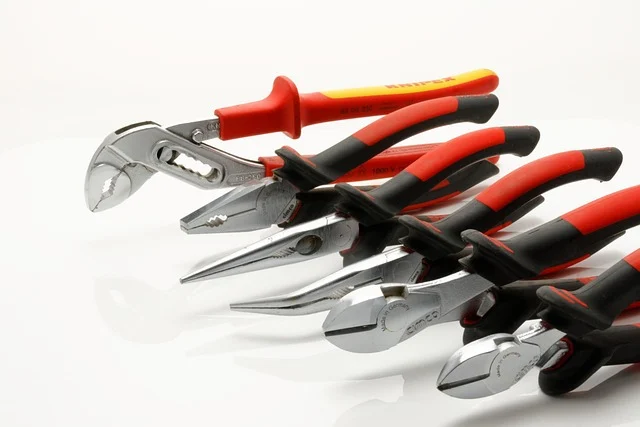
- Chain-nose pliers: You use these flat-faced pliers to hold jump rings, grip wire ends, and tuck sharp edges safely away.
- Round-nose pliers: You use these conical jaws to bend smooth curves, headpin loops, and connector rings.
- Flush cutters: You cut wire with the flat side facing your work to create a clean, square end rather than a sharp, pinched V-shape.
- Bead mat: A textured foam or soft fabric pad keeps round beads and tiny metal findings from rolling off your table.
When selecting wire, pay close attention to gauge (thickness) and temper (hardness). Higher gauge numbers mean thinner wire. You use 20-gauge or 22-gauge wire for sturdy earwires and structural loops. You use 24-gauge or 26-gauge wire for wrapping small accent beads. Always buy dead-soft or half-hard craft wire made of brass, copper, or silver-filled base metals when learning.
How to make jewelry for beginners
You start making jewelry by mastering four basic physical steps: opening jump rings, turning simple loops, wrapping wire connections, and crimping stringing wire.
- Open jump rings correctly: Hold the right side of the ring with chain-nose pliers and the left side with a second pair of pliers. Twist one hand toward you and the other away from you. Never pull the ring open sideways, or you will ruin its round shape.
- Form a simple loop: Thread a bead onto a headpin. Grip the wire 1/16th of an inch above the bead using round-nose pliers. Bend the wire at a 90-degree angle, then roll the tip back over the top jaw until you form a complete circle.
- Make a wrapped loop: After forming your loop over the pliers jaw, grip the loop with chain-nose pliers. Take the remaining tail of wire and wrap it tightly around the stem two to three times before trimming the excess flush.
- Secure beading wire with crimps: Thread a crimp tube and a clasp onto multi-strand steel wire. Loop the wire back through the crimp tube. Compress the crimp firmly with crimping pliers to lock the wire in place, then cover it with a metal crimp cover.

Common beginner problems and quick fixes
- Problem: Elastic bracelet snaps easily. Fix: Pre-stretch elastic cord three times before stringing beads. Secure your finishing knot with a tiny drop of hypo-cement glue, and hide the knot inside a large-hole bead.
- Problem: Wire loops look lumpy and uneven. Fix: Mark your round-nose pliers jaws with a fine marker line. Next, always place your wire at that exact spot on the jaw to guarantee uniform loop sizes every time.
- Problem: Pliers leave harsh dent marks on metal wire. Fix: Switch to smooth-jaw pliers instead of serrated hardware tools, or wrap rubber tape over your pliers tips.
How to design jewelry for beginners
You create balanced jewelry designs by planning layout, color weight, and scale before cutting any wire or string. Lay your beads out on a bead design board to measure lengths accurately and preview focal points.
Use simple design balance rules:
- Rule of thirds: Place your largest focal bead in the center, flanked by two smaller accent groups spaced evenly along the strand.
- Color harmony: Pair complementary colors (like blue lapis with warm brass) or monochromatic shades (like light amethyst, dark purple, and clear crystal) for clean visual impact.
- Length standards: Aim for standard neck sizes: 16 inches for a choker, 18 inches for a princess length, and 20 inches for a matinee style.
For basic jewelry making, you sketch ideas in a notebook. For complex 3D rendering, commercial designers use specialized computer software, but this is far beyond the beginner stage.
Exploring Popular Beginner Jewelry Styles
Once you learn basic tool control, pick one specific technique to focus your practice. Each style uses unique materials and assembly methods.
Wire jewelry for beginners
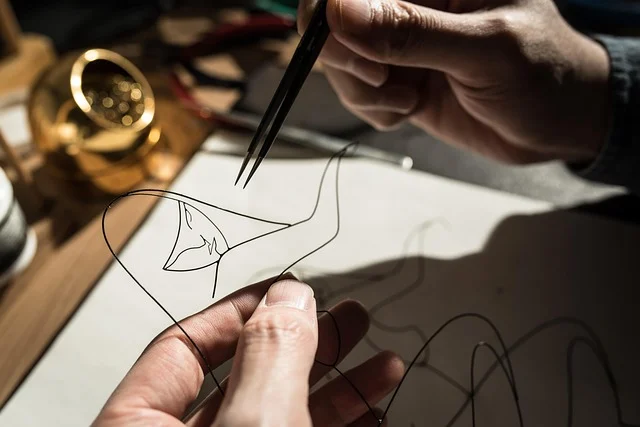
Wire jewelry uses soft metal wires to structure, bind, and connect components without solder or glue. You begin by wrapping glass beads onto pre-formed metal frames or connecting cold-worked links into drop earrings. Next, focus on wire wrapping cabochons once you master keeping your wire coils tight and parallel.
Resin jewelry for beginners
Resin jewelry lets you embed dried flowers, pigments, and foil into clear liquid plastic that hardens into glass-like pendants. Beginners should start with UV resin, which cures under an ultraviolet lamp in two minutes, rather than two-part epoxy resin, which requires precise ratio mixing and 24-hour cure times.
Always prioritize safety when working with resin:
- Work near open windows or run an exhaust fan to pull fumes away from your face.
- Wear nitrile gloves to prevent liquid resin from contacting your skin.
- Wear eye protection and a dust mask when sanding cured resin pieces.
Chainmail jewelry for beginners
Chainmail jewelry involves linking hundreds of individual metal jump rings into flexible, woven patterns. You need two pairs of smooth chain-nose pliers to open and close every ring cleanly. Beginners should start with the simple European 4-in-1 weave or the Byzantine weave using 16-gauge saw-cut aluminum jump rings.
Macrame jewelry for beginners
Macrame uses knotting patterns to create woven cord bracelets and gemstone net pendants. You only need waxed polyester cord, a clip board, and a pair of scissors. First, practice the basic square knot and half-hitch knot to build adjustable friendship bracelets and corded gemstone wraps.
Soldering jewelry for beginners
Soldering connects metal pieces permanently using heat and silver solder alloy. Unlike soft electronics soldering, jewelry soldering requires a small butane torch to heat the entire metal piece until solder flows into the joint at temperatures over 1,200 degrees Fahrenheit.
To try torch soldering safely at home:
- Place a firebrick on a non-flammable surface away from curtains or flammable material.
- Clean your metal thoroughly with steel wool to remove oxides and grease.
- Apply liquid flux to the joint to prevent oxidation during heating.
- Place a tiny snippet (pallion) of easy silver solder on the fluxed joint.
- Direct your torch flame around the entire piece until the metal reaches bright heat and the solder flows smoothly into the seam.
- Quench the hot metal in water, then immerse it in a safe pickle bath solution to remove surface scale.
Jewelry making for beginners book and PDF resources
Visual diagrams and step-by-step printable PDF charts speed up your learning curve. Also, look for reference books that include clear photographs showing hand positioning from the maker’s point of view.
When selecting learning guides, look for downloadable PDFs that contain:
- 1:1 scale wire gauge charts: You lay your wire directly over the printout to confirm thickness.
- Bead size conversion tables: Visual references that show how many 4mm, 6mm, or 8mm beads you need for a 7-inch bracelet.
- Jump ring aspect ratio guides: Charts that match wire diameter to inner ring diameter for chainmail weaves.
You can buy beginner kits, specialty findings, and downloadable tutorial guides directly from major craft outlets, local bead shops, and online marketplaces like Etsy.
Frequently Asked Questions About Jewelry for Beginners
How much does it cost to start making jewelry?
The initial investment can be as low as $50-$100 for a basic set of tools and a selection of affordable materials like glass beads and craft wire. As a result, jewelry for beginners allows you to complete several simple projects without a significant financial commitment.
What are the easiest jewelry items to make first?
Simple beaded bracelets using elastic cord, basic pendant necklaces, and loop-earrings are generally considered the easiest projects for beginners due to their straightforward techniques and minimal component requirements.
Do I need special software for jewelry design?
For basic jewelry making, no special software is required. You can sketch ideas in a notebook. For more complex 3D design, software like Professionals uss rhino or Matrix, but this is far beyond the beginner stage.
Where can I buy beginner jewelry making supplies?
Supplies are readily available online from major craft retailers, specialized jewelry supply websites, and marketplaces like Etsy. Local craft stores also carry a good selection of beginner-friendly tools and materials.
How long does it take to learn jewelry making?
Basic skills like stringing beads or simple wire wrapping can be learned in a few hours. However, developing proficiency and mastering more complex techniques like intricate wire sculpting or metalworking can take months or years of consistent practice.
What is the most important tool for a beginner jewelry maker?
While a few tools are essential, a good pair of chain-nose or flat-nose pliers is arguably the most crucial. They’re versatile for gripping, bending, and closing components, making them indispensable for most beginner projects.
Is resin jewelry making safe for beginners?
Yes, resin jewelry making can be safe for beginners if proper precautions are taken. First, always work in a well-ventilated area, wear gloves, and follow the manufacturer’s instructions for mixing and curing the resin to avoid exposure to fumes.