





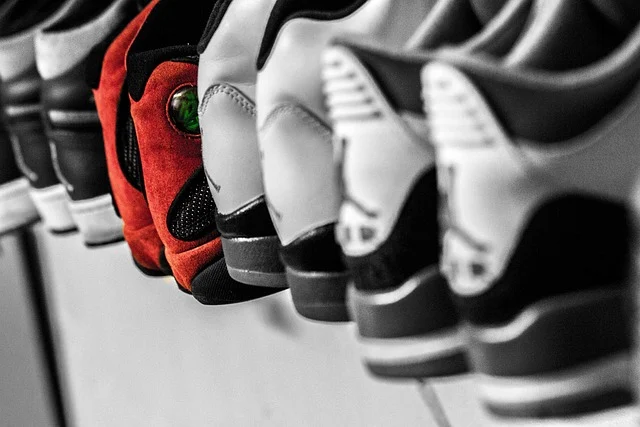
The best Jordan 1 colorways to invest in are original high-top colorways like the Chicago and Bred. Investors also look to high-tier collaborations such as Travis Scott and Union LA, alongside limited series like the Shattered Backboard. These pairs retain high resale value due to strict scarcity, historic career significance, and steady collector demand.
Evaluating the best Jordan 1 colorways to invest in requires moving past short-term hype. You must look at structural market fundamentals. First designed by Peter Moore in 1985, the Air Jordan 1 created the modern athletic sneaker resale market. Decades later, the silhouette remains an anchor of collector footwear, but not every colorway offers equal financial returns. General release colorways can sit on store shelves or lose value over time. However, specific high-top iterations continue to function as tradeable assets with predictable price dynamics.
What makes an Air Jordan 1 colorway worth investing in?
To select pairs that appreciate over time, you must evaluate five key variables before making a purchase:
- Silhouette height and cut: Air Jordan 1 High OG models dominate secondary market returns. While select Air Jordan 1 Low collaborations (such as Travis Scott releases) perform exceptionally well, standard Lows and Mids carry higher production numbers and rarely hold value long-term.
- Sizing liquidity: Men’s sizes US 9 through 11 generate the highest trading volume on secondary market platforms. Extreme sizes (below US 7.5 or above US 13) can command higher peak prices due to extreme scarcity. However, they take significantly longer to sell, tying up capital.
- Production volume: Sneaker scarcity is dictated by production numbers and distribution tiers. According to data from SneakerAnalytics, colorways with production runs under 5,000 units average a 300% higher resale markup than those with production exceeding 50,000 units.
- Condition and completeness: A shoe is only investment-grade if it is Deadstock (completely unworn, factory laced). It must include an undamaged original box, lace bags, and inserts. Flawed or damaged packaging can reduce total market value by 10% to 20%.
- Narrative and cultural significance: Colorways tied directly to Michael Jordan’s career milestones or iconic pop-culture moments maintain strong baseline demand regardless of broader economic shifts.
The best jordan 1 colorways to invest in
Different colorways serve distinct investor strategies depending on your budget, risk tolerance, and target holding period.
1. The Original 1985 Classics (Chicago and Bred)
The “Chicago” (White/Varsity Red-Black) and “Bred” (Black/Varsity Red, also known as the “Banned”) represent the foundation of sneaker collecting. The league fined Jordan $5,000 per game in 1984 for non-conforming footwear. Nike leveraged this uniform violation story into a global phenomenon.
Pristine original 1985 pairs command figures well into five digits at luxury auctions. Modern retro releases, such as the 2015 Chicago, the 2016 Bred, and the 2022 “Lost & Found” (Chicago Reimagined), consistently outpace broader equities in long-term return on investment. The trade-off with OG colorways lies in Nike’s retro cycle. When Nike announces a new retro, secondary market prices often plateau briefly before rising again after stock absorbs.
2. The Shattered Backboard Series
Debuting in 2015, the Air Jordan 1 High OG “Shattered Backboard” (SBB) commemorated an August 1985 exhibition game in Trieste, Italy. During a dunk, Michael Jordan shattered a glass backboard while wearing an orange, black, and white Stefanel jersey. The original SBB 1.0 became legendary not just for its story, but for setting a new benchmark in leather quality on a Jordan release.
Next, the SBB lineup includes the SBB 1.0 (2015), SBB 2.0 / Away (2016), Reverse SBB, and SBB 3.0 (2019). The original 2015 pair consistently trades between $1,000 and $1,600 depending on size. Material execution presents a clear trade-off within this series. The SBB 3.0 used a crinkled patent leather upper that divided collector opinion. This led to slower price appreciation compared to the tumbled leather of the 1.0 and 2.0 editions.
3. High-Profile Cultural Collaborations (Travis Scott and Dior)
Celebrity and luxury fashion collaborations represent the high-volatility, high-reward segment of sneaker investing. The Travis Scott x Air Jordan 1 High OG “Cactus Jack” (2019) features an oversized backwards Swoosh and hidden ankle stash pocket. It established a new design template for footwear. Resale prices routinely exceed $1,200 to $1,800.
Similarly, the 2020 Dior x Air Jordan 1 High and Low was limited to 8,500 high-top pairs and 4,700 low-top pairs globally. Crafted in Italy with Dior gray calfskin, it shattered retail price ceilings with a $2,000 tag and resale values exceeding $7,000. Low-top variations like the Travis Scott “Reverse Mocha” (2022) have also bucked the traditional “Highs only” investment rule, trading well above $800. Counterfeit risk is the primary trade-off with collaboration pairs, as replica manufacturers heavily target these high-value models.
4. Boutique & Artist Collaborations (Union LA and Fragment Design)
Boutique partnerships offer structural scarcity due to limited distribution. These pairs rank among the best Jordan 1 colorways to invest in today. Union LA’s 2018 pack used a vintage thrift aesthetic. Both pairs reached grail status, trading between $1,000 and $1,800.
Engineered by Hiroshi Fujiwara, the 2014 Fragment Design x Air Jordan 1 High featured royal blue color blocking. It also included an embossed lightning bolt heel logo. With a global production run under 3,000 pairs, it is one of the best Jordan 1 colorways to invest in today. These limited-edition releases require substantial upfront capital, but offer low downside volatility because supply is permanently fixed.
5. OG-Inspired Modern Releases (University Blue, Georgetown, Palomino)
For investors seeking entry points below $300, modern colorways that use traditional OG color blocking provide stable long-term growth. Releases like the Air Jordan 1 High “University Blue” (2021), “Georgetown” 1985 Cut (2022), “Court Purple” (2020), and “Palomino” (2023) borrow the classic color layout of 1985 pairs while introducing fresh tones.
They are less prone to sudden price crashes and appeal to a broad market of wearers and collectors alike.
How do top Jordan 1 colorways compare for investors?
This side-by-side comparison outlines how each major category performs across core investment criteria:
| Colorway Category | Investment Tier | Secondary Liquidity | Risk Profile | Ideal Hold Period | Best Suited For |
|---|---|---|---|---|---|
| Original Classics (Chicago, Bred) | Tier 1 (Foundation) | Very High | Low | 3 to 5+ Years | Conservative investors seeking steady, capital-preservation growth |
| High Collaborations (Travis Scott, Dior) | Tier 1 (High Yield) | High | Medium-High | 1 to 3 Years | Active traders capitalized for high entry costs and fake-risk mitigation |
| Limited Series (Shattered Backboard 1.0/2.0) | Tier 2 (Grail Status) | Moderate-High | Low-Medium | 2 to 4 Years | Mid-to-high capital collectors looking for low-supply assets |
| Boutique Collabs (Union LA, Fragment) | Tier 1 (Ultra Scarce) | Moderate | Low | 3 to 7 Years | Long-term portfolio holders focused on permanent scarcity |
| OG-Inspired Retros (University Blue, Palomino) | Tier 3 (Entry Level) | High | Low-Medium | 2 to 3 Years | First-time sneaker investors building initial portfolio volume |
How do you acquire investment-grade Air Jordan 1s safely?
Acquiring pristine, authentic pairs requires systematic sourcing and thorough authentication procedures.
- Secure retail pairs through primary channels: Register for official draws on Nike SNKRS and tier-1 boutique raffles (such as Kith, Undefeated, Union, and Atmos). Buying at retail price ($180–$200) guarantees instant built-in equity.
- Source secondary pairs from verified exchanges: If buying after release, use established platforms like StockX, GOAT, or eBay Authenticity Guarantee to reduce counterfeit risks.
- Conduct physical authentication upon arrival:
- Check the heel structure: Authentic Air Jordan 1 Highs feature a distinct “hourglass” shape when viewed directly from behind, tapering in at the middle stitch and widening at the top and bottom.
- Inspect stitch line density: Count the stitches along the lateral Swoosh and heel counter. Replicas often exhibit sloppy corner-stitch flaws where the thread directly crosses the Swoosh corner instead of hovering above it.
- Evaluate leather scent and density: Authentic Nike leather uses specific chemical glues and tanning processes; harsh solvent odors indicate counterfeit production.
- Inspect internal details: Remove the footbed to inspect the blue strobel board stitching pattern. Verify the factory stamp inside the shoe box lid.
- Verify packaging and complete sets: Preserve original extra laces in their factory bags, shoe trees, and box tissue paper. Missing accessories lower resale value by 5% to 15%.
What are the main risks and common mistakes in sneaker investing?
Sneaker assets carry specific operational and market risks that every investor must handle:
- Storage degradation and oxidation: Improper storage is the single biggest threat to sneaker preservation. High humidity causes soles to yellow and clear translucent rubber to oxidize. Extreme heat dries out rubber midsoles, leading to foam crumbling or sole separation over 7 to 10 year spans. Store pairs in clear acrylic drop-front boxes or original packaging with silica gel packs in climate-controlled rooms away from direct UV light.
- Nike restock and “Reimagined” series dilution: Nike periodically re-releases popular colorways or updates them with distressed treatments (such as pre-yellowed midsoles or cracked leather). A surprise restock increases circulating supply, temporarily dampening secondary market prices on existing pairs.
- High transaction fees: Resale marketplaces charge commission fees ranging from 8% to 12% plus payment processing fees. You must factor these seller costs into your profit calculations before listing.
- Chasing mid-tier hype and non-OG silhouettes: A common mistake is stocking Air Jordan 1 Mids or general-release Lows hoping for High-like returns. These models rarely appreciate significantly because production volumes remain high and collector demand is low.
- Capital misallocation in luxury streetwear: High initial entry points lead some investors to question whether expensive streetwear assets are worth the upfront capital compared to traditional assets. Focusing on pairs with proven multi-year liquidity protects capital.
What is the current market outlook for Jordan 1 investments?
The secondary sneaker market has transitioned from rapid speculative flipping into a matured collector market. According to research on the global sneaker resale market, buyers are prioritizing long-term physical condition, provenance, and historical importance over short-lived social media trends.
In 2026, growth continues to concentrate in original 1985 colorways, limited Japanese exclusives (such as the CO.JP series), and high-concept collaborations that push structural design boundaries. Investors who focus on pristine Deadstock pairs in core liquid sizes (US 9–11) remain best positioned. They can earn consistent returns while mitigating downside risk.
Frequently asked questions
Are Air Jordan 1s still a good investment?
Yes, original 1985 releases rank among the best Jordan 1 colorways to invest in today. The broader market favors proven classics over mass-produced general releases.
Which size Jordan 1 is best for investment?
Men’s sizes US 9 through 11 offer the highest trading volume, strongest liquidity, and most consistent price appreciation. While smaller sizes (US 4–7) or larger sizes (US 12–14) can occasionally command higher top-tier prices due to low stock numbers, they sell much more slowly.
How should I store Air Jordan 1s to maintain their value?
Store shoes unworn in their original box with non-acidic paper and silica gel packets inside a climate-controlled room away from direct sunlight. Avoid storing sneakers in humid basements or hot attics, which accelerate sole yellowing and rubber breakdown.
What is the difference between Deadstock and Near-Deadstock value?
Deadstock (DS) pairs are completely unworn, factory-laced, and include all original packaging and accessories, fetching maximum market value.
Should I invest in Air Jordan 1 Highs, Mids, or Lows?
High OG models are the primary choice for sneaker investment because they carry the highest historical relevance and collector demand. Air Jordan 1 Lows are generally worth investing in only when tied to major collaborations like Travis Scott or Dior, while Mids rarely appreciate enough to justify holding.