













To choose the right wedding band width and profile, match the width (typically 2mm–4mm for women, 5mm–8mm for men) to your finger length and engagement ring, then select a profile—like a domed court fit for daily comfort or a flat profile for a sleek modern look—that suits your lifestyle. Taking both dimensions into account ensures your ring fits comfortably over your knuckle, sits naturally against neighboring fingers, and withstands daily wear.
While buyers often focus first on metal choice or stone settings when choosing a wedding ring, width and profile dictate daily physical wearability and proportion. Width measures the horizontal coverage across your finger in millimeters, whereas profile refers to the cross-sectional shape of the band—including its outer contour, inner surface, and wall thickness. Choosing the ideal combination balances long-term physical comfort, structural strength, and visual harmony.
How does wedding band width affect comfort, durability, and appearance?
Wedding band width is measured across the outer surface of the band from edge to edge in millimeters. While width is an aesthetic choice, it directly influences how a ring sits on your finger, how tight it feels, and how well it resists structural damage over decades of daily wear.
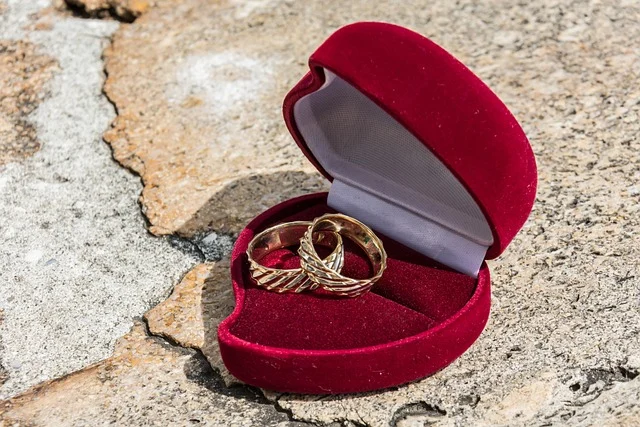
Standard wedding band width categories
- Ultra-Thin (1.5mm to 2mm): Ultra-thin bands offer a delicate, minimalist aesthetic. They are popular for dainty bridal stacks or pairing with delicate engagement rings. However, precious metals like 14k or 18k gold in widths under 1.8mm can bend, warp, or wear down thinner over time under heavy manual pressure.
- Slim / Standard Women’s (2.5mm to 4mm): This range offers a balance between subtle design and structural integrity. A 2.5mm to 3mm band provides enough metal volume to secure accent stones or withstand daily wear while keeping a slim profile against the finger.
- Medium / Standard Men’s (5mm to 6mm): The 6mm width is the most popular choice for men’s wedding bands and works well as a bold statement band for women. It offers a substantial feel without trapping excessive skin moisture or feeling bulky between adjacent fingers.
- Wide / Heavy Duty (7mm to 8mm+): Wide bands present a strong, modern visual presence. They suit larger hands and longer fingers well. However, wide bands cover more skin surface area, which retains heat and moisture and alters how the ring fits across the knuckle.
Hand proportions and visual balance
The length and width of your fingers determine how a band looks on your hand. On short or slender fingers, a band wider than 6mm can overpower the hand and make fingers appear visually shorter. On larger hands or longer fingers, a narrow 2mm band can look undersized. Choosing a width that covers roughly one-third to one-half of the lower phalanx creates visual balance.
Width and ring sizing adjustments
A wider band traps more skin tissue and creates more friction against the finger than a narrow band. As a result, a 6mm or 8mm band will feel significantly tighter than a 2mm band of the exact same finger size. When selecting a band 6mm or wider, test your size using a wide-band ring gauge. Professional sizing often requires going up one-quarter to one-half size higher than your standard narrow ring size (see Men’s Skincare Routine: Simple Steps for Healthier Skin for detailed sizing steps).
What are the main wedding band profiles and how do they feel?
The profile of a wedding band describes its cross-sectional geometry. This includes the outer surface contour, the inner surface touchpoint, and the height of the metal edge off your skin. While width controls visual proportion across the finger, the profile determines physical comfort against neighboring fingers and knuckles.
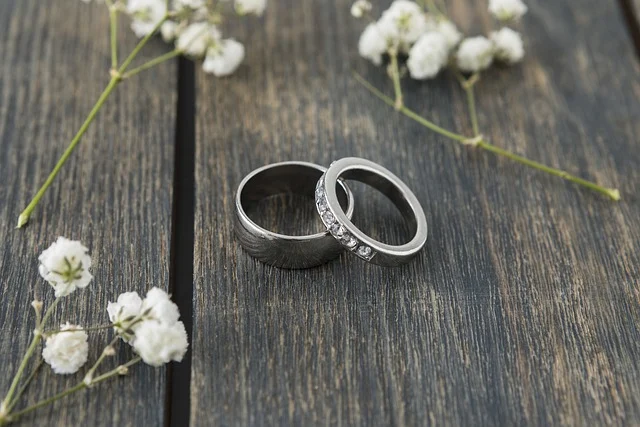
Comparing wedding band profiles
| Profile Name | Outer Contour | Inner Contour | Comfort Level | Best Suitable For |
|---|---|---|---|---|
| Court (Comfort Fit) | Rounded / Domed | Rounded / Domed | High | Daily wear, active lifestyles, sensitive skin |
| Traditional D-Shape | Rounded / Domed | Flat | Moderate | Classic understated appearance, traditional styling |
| Flat Profile | Flat | Flat | Moderate | Modern architectural look, crisp straight edges |
| Flat Comfort Fit | Flat | Rounded / Domed | High | Contemporary aesthetic paired with all-day comfort |
| Beveled Edge | Flat center with angled edges | Rounded or Flat | High | Masculine styling, reducing sharp side edges |
| Knife Edge | Pointed central ridge | Flat or Rounded | Moderate | Unique vintage stacks, complementing pointed settings |
Court profile (Comfort Fit) versus Flat profile
The interior curve of a ring profile is the single biggest factor in long-term wearability. Standard flat-interior bands lie completely flush against the finger skin. While this creates a snug initial grip, flat interiors trap sweat, soap, and moisture against the skin, which can cause skin irritation or redness. Flat interiors also create sharp contact edges when sliding over knuckles.
A court or comfort-fit interior features a convex curve inside the band. This curved surface reduces direct friction against the skin, allowing air circulation and moisture evaporation. The smooth inner edge rolls easily over the knuckle joint, making comfort-fit bands ideal for anyone who wears their ring continuously during exercise, manual work, or handwashing.
Flat comfort fit and beveled options
If you prefer the modern aesthetic of a flat exterior surface, you do not have to settle for an uncomfortable interior. A flat comfort-fit band combines a straight, clean exterior silhouette with a rounded interior contour. Beveled-edge bands take this balance further by angling the outer side edges, preventing the ring from catching on clothing or pinching adjacent fingers during a handshake.
Band thickness and depth clearance
In addition to width and interior profile, pay attention to ring thickness—the vertical depth measuring how high the ring sits off your skin (typically between 1.3mm and 2.3mm). A band that is too thick will force adjacent middle and pinky fingers apart, causing hand fatigue. A band that is too thin (under 1.2mm) lacks structural strength and can dent easily. Aim for a medium depth around 1.5mm to 1.8mm for comfortable side clearance.
How to Choose the Right Wedding Band Width and Profile
Pairing a wedding band with an existing engagement ring requires coordinating width, profile height, and band curvature so both rings sit naturally together without damaging each other.
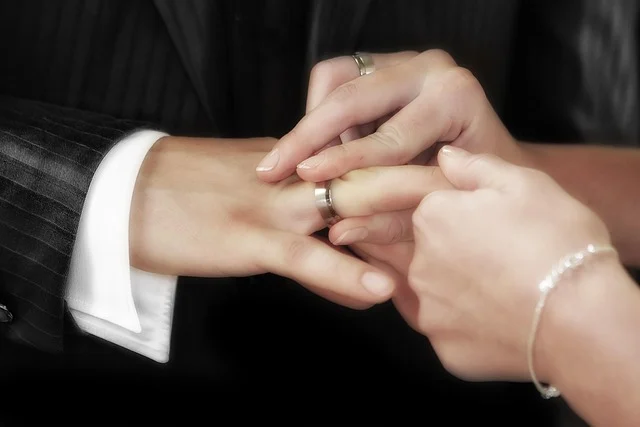
Achieving width balance in a stack
For a unified look, match the wedding band width within 0.5mm to 1mm of the engagement ring’s band width. For example, a delicate 2mm solitaire engagement ring pairs naturally with a 2mm or 2.5mm wedding band. Alternatively, pairing a thin engagement band with a slightly wider wedding band (such as 3mm or 3.5mm) creates visual distinction while preserving balance.
If the engagement ring features a wide or elaborate setting, choose a band width that supports the overall structure without overwhelming the central gemstone. A vintage engagement ring with a thick platinum band can pair well with a 4mm flat-top band featuring a court interior, giving the stack presence without sacrificing comfort.
Matching profile contours and flush alignment
The exterior profile of your wedding band should complement the shape of your engagement ring shank. Pairing a rounded court wedding band with a domed engagement ring shank creates a natural flow. If you pair a flat-profile wedding band with a domed engagement ring, the contrast in edges will be noticeable and can leave an unintended gap.
Consider setting height and prong position:
- High-set engagement rings: Center stones set high in a basket allow a straight wedding band to slide underneath and sit completely flush against the engagement band.
- Low-set engagement rings: Center stones mounted low near the band prevent straight wedding rings from sitting flush, creating a gap between the bands.
- Contoured and notched bands: Curved or notched bands are custom-shaped to swoop around low-set stones, eliminating gaps and holding the rings in alignment.
Material hardness and metal wear
When stacking two rings on the same finger, metal friction will wear down softer alloys over time. Pairing an 18k yellow gold band with a platinum engagement ring, for example, will cause the harder platinum edges to scratch and wear down the softer gold band over time. Match metals where possible, or choose scratch-resistant materials like tungsten or titanium for stand-alone wedding bands (see Best Sneakers for Standing All Day: A Guide to All-Day Comfort for metal comparison details).
How to choose the right width and profile step by step
- Evaluate hand and finger structure: Measure your finger length, hand size, and knuckle size. Long fingers or wide knuckles accommodate 6mm–8mm bands easily, while shorter or slender fingers suit 2mm–4mm widths.
- Factor in your daily routine: Consider your work environment and physical activities. If you work with machinery, lift weights, clean frequently, or wear medical gloves, prioritize a low-depth court profile band that will not catch or pinch.
- Try physical samples in multiple widths: Visit a local jeweler to test physical sample bands in 2mm increments (2mm, 4mm, 6mm, 8mm). Leave each sample on for a few minutes to evaluate how it feels when flexing your hand.
- Select a comfort-fit interior: Choose a court interior contour for bands over 3mm wide to ensure ventilation, ease over knuckles, and reduced skin friction during continuous wear.
- Check alignment with your engagement ring: If pairing with an engagement ring, wear both rings together. Test whether the bands sit flush, whether prongs rub against the wedding band, and whether the combined width feels comfortable when making a fist.
- Verify wide-band sizing before ordering: If choosing a band width of 6mm or greater, measure your size with a wide sizing gauge or increase your size by a quarter to half size to maintain a comfortable fit.
What common mistakes happen when choosing band width and profile?
Avoiding standard sizing and selection mistakes saves you from unnecessary resizings, uncomfortable daily wear, or accidental ring damage.
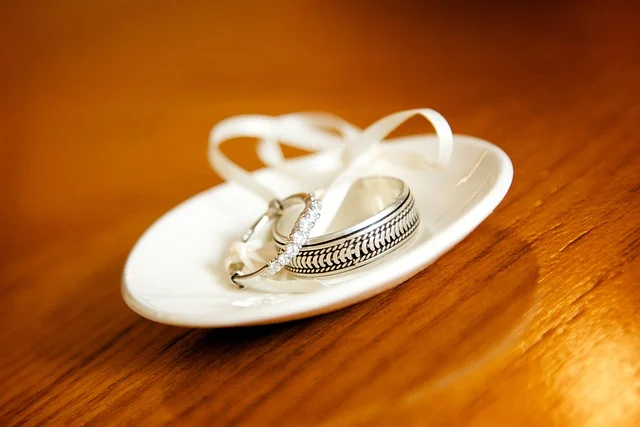
- Ordering standard finger size for wide bands: Choosing a 7mm or 8mm band in your standard 2mm ring size usually results in a band that is far too tight. Always size specifically for the target width.
- Selecting ultra-thin bands for active jobs: Delicate 1.5mm gold bands are prone to warping, twisting out of round, or snapping when exposed to heavy lifting or impact. Opt for at least 2mm–2.5mm width for daily structural resistance.
- Ignoring profile wall depth: Focusing only on band width while selecting an overly thick profile wall (above 2.2mm) leads to uncomfortable lateral pressure against adjacent pinky and middle fingers.
- Choosing sharp flat edges for manual work: Standard flat-profile rings with sharp 90-degree outer edges can catch on fabric, scratch surfaces, and cut into neighboring skin during heavy gripping. Flat comfort-fit or beveled profiles solve this problem.
- Forgetting non-resizable metal limits: Metals such as tungsten carbide, titanium, and ceramic cannot be resized in the future. Selecting an exact width, profile, and size is critical when buying non-resizable bands.
Frequently asked questions
Should men choose a 6mm or 8mm wedding band width?
A 6mm width is the standard versatile choice for most men’s hands, balancing presence and comfort. An 8mm width works best for men with larger hands, ring sizes above size 10, or longer fingers who prefer a bold visual look.
Does a comfort-fit wedding band run larger or smaller than standard fit?
Because a comfort-fit band has a rounded interior, it slides over the knuckle more easily than a flat standard-fit band. As a result, comfort-fit bands can feel slightly roomier, often requiring a quarter-size smaller than a flat-interior band of the exact same width.
What wedding band width works best with a solitaire engagement ring?
A band width between 2mm and 3mm provides an ideal balance for a solitaire engagement ring. This width matches typical solitaire shanks without competing visually with the center stone.
Can a flat profile wedding band cause skin irritation?
Yes, a standard flat-profile band lies completely flat against the skin, trapping moisture, soap, and dirt underneath. Choosing a flat comfort-fit band keeps the clean flat exterior while adding a rounded interior that allows skin ventilation and prevents irritation.
How does band thickness affect daily ring wear?
Band thickness (or depth off the finger) dictates side-finger clearance and structural resistance. A thickness of 1.5mm to 1.8mm provides maximum strength while allowing your fingers to rest comfortably together without pinching.


