






Building a practical setup of newborn babytøj requires 6–8 bodysuits, 6–8 sleepsuits, 2–3 soft cotton hats, and 3–4 pairs of socks or booties split between size 50 and size 56. Choosing breathable fabrics like OEKO-TEX certified organic cotton, merino wool, or bamboo blends ensures gentle comfort on delicate skin. Features such as envelope necklines and two-way zippers make daily dressing and diaper changes fast and gentle.
This guide details exact wardrobe quantities and explains how a baby’s 24-hour schedule drives daily clothing turnover. It covers sizing decisions between size 50 and size 56, key garment design features, laundering procedures for diaper blowouts, and optimal fabric choices for temperature regulation.
Newborn Babytøj: Complete 6–8 Item Wardrobe Checklist, Sizing Rules & Fabric Guide
To assemble a practical setup of newborn babytøj, purchase 6–8 bodysuits, 6–8 sleepsuits, 2–3 soft cotton hats, and 3–4 pairs of socks or booties split between size 50 (newborn) and size 56 (0–3 months). Focus on breathable OEKO-TEX certified organic cotton, merino wool, or bamboo blends featuring envelope necklines and two-way zippers to make daily dressing and diaper changes fast and gentle on delicate skin.
This comprehensive guide details precise wardrobe quantities, fabric comparisons, sizing transitions, and laundering procedures designed to keep your baby comfortable while minimizing unnecessary clothing purchases.
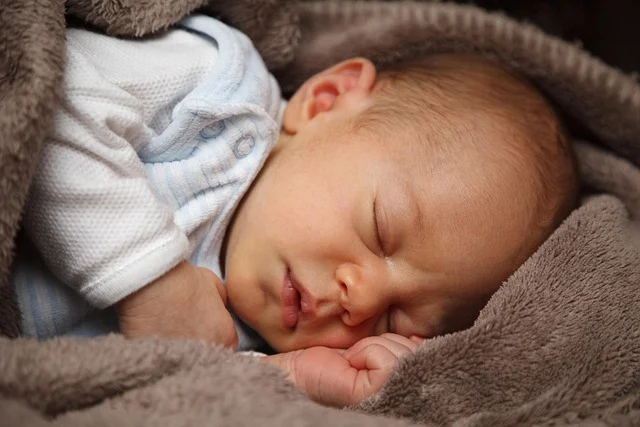
What newborn baby clothes do you actually need in week 1?
During the first few weeks, newborn babytøj should focus exclusively on quick-access layerable items rather than complex decorative outfits. Babies spend the majority of their time sleeping, nursing, and being held, making softness and ease of dressing far more important than style.
| Item Category | Recommended Quantity | Primary Function | Key Feature to Look For |
|---|---|---|---|
| Bodysuits (Short or Long Sleeve) | 6–8 pieces | Base layer under garments or standalone summer wear | Envelope shoulders or wrap/kimono snap closures |
| Sleepsuits / Onesies | 6–8 pieces | Full-body warmth for sleeping and day lounging | Two-way zippers or quick-snap crotch fasteners |
| Soft Cotton Hats | 2–3 pieces | Head temperature regulation indoors and outdoors | Flat seams without inner tag irritation |
| Socks or Booties | 3–4 pairs | Keeps feet warm when wearing footless suits | Soft ribbed cuffs that stay on without leaving red rings |
| Leggings / Trousers | 3–4 pairs | Extra layer over bodysuits on cooler days | Wide, elastic-free soft waistband that avoids pressing on the umbilical stump |
| Cardigans or Knit Jumpers | 2 pieces | Outer warmth layer for trips outside | Front-button or front-zip openings (avoid pull-overs) |
A worked example: 24 hours of newborn babytøj changes
Understanding why you need 6–8 of each core item comes down to daily wardrobe turnover. In a standard 24-hour period, a typical newborn schedule requires multiple outfits due to feeding spit-ups, diaper leaks, and temperature shifts:
- Morning (08:00): Baby wears a long-sleeve organic cotton wrap bodysuit and leggings.
- Midday (12:30): Diaper blowout requires a complete change into bodysuit #2 and a fresh sleepsuit.
- Afternoon (15:30): Milk spit-up dampens the chest area; bodysuit #2 is swapped for bodysuit #3.
- Nighttime (20:00): Fresh sleepsuit #2 paired with a thin cardigan for bedtime.
- Overnight (03:00): Wet diaper leak requires changing into sleepsuit #3.
In a single day, 3 bodysuits and 3 sleepsuits can easily cycle into the laundry basket. Having 6–8 pieces of each item ensures you only need to run laundry every two to three days.
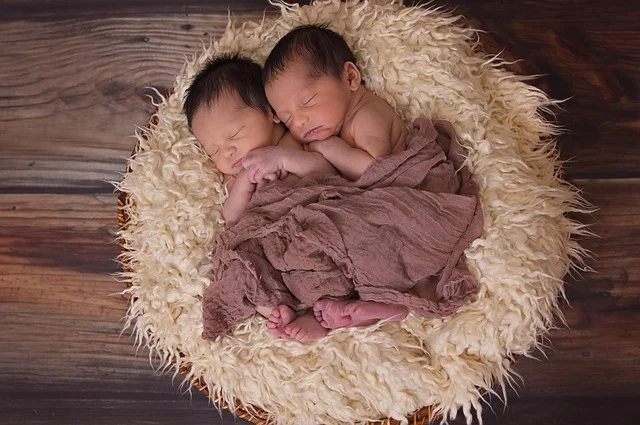
Is newborn baby size necessary or should you buy 0-3 months?
Deciding between size 50 (newborn) and size 56 (0–3 months) depends on estimated birth weight and length. Size 50 is designed for babies up to 50 cm long (roughly 2.5 kg to 3.5 kg), while size 56 accommodates babies up to 56 cm long (roughly 3.5 kg to 4.5 kg).
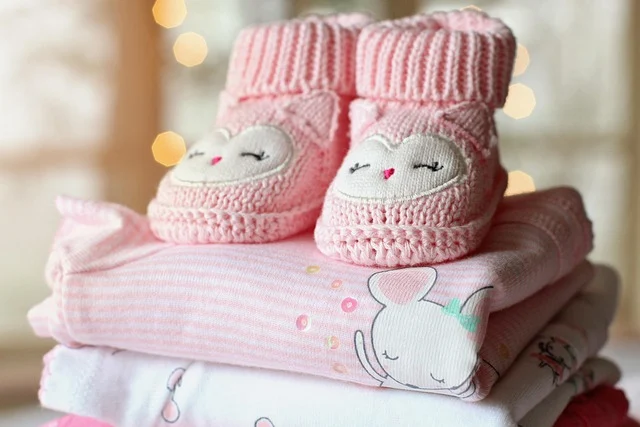
| European Size Label | Standard Age Equivalent | Baby Length Range | Baby Weight Range | Strategy |
|---|---|---|---|---|
| Size 50 | Newborn (0–1 Month) | 44–50 cm | 2.5–3.5 kg | Buy 4–6 bodysuits and sleepsuits; skip if late scans estimate >4 kg |
| Size 56 | 0–3 Months | 51–56 cm | 3.5–5.0 kg | Buy 6–8 of each base item; fits average newborns for 6–8 weeks |
| Size 62 | 3 Months | 57–62 cm | 5.0–6.5 kg | Store in reserve; ideal for rapid growth spurts at week 4–6 |
Buying exclusively 0–3 months (size 56) to save money can backfire in the first two weeks. Oversized sleepsuits leave loose fabric around the neck and cause baby feet to slide out of the footies, creating cold pockets and potential tripping or tangling risks. Owning at least a minimal capsule (4–6 pieces) in size 50 ensures a snug, safe fit during the first days home from the hospital.
When newborn baby clothing purchases should begin
Many parents begin purchasing newborn babytøj around the second trimester of pregnancy, after the initial first-trimester milestone. Purchasing in the second trimester allows ample time to organize the nursery, take advantage of seasonal sales, and avoid late-pregnancy stress.
However, avoid purchasing your entire wardrobe in size 50 early on. Wait until late third-trimester ultrasound growth scans give a clearer estimate of birth weight. If doctors predict a baby over 4 kg, limit size 50 purchases and stock up primarily on size 56. Conversely, split your capsule 50/50 between sizes 50 and 56 to remain prepared for any birth size.
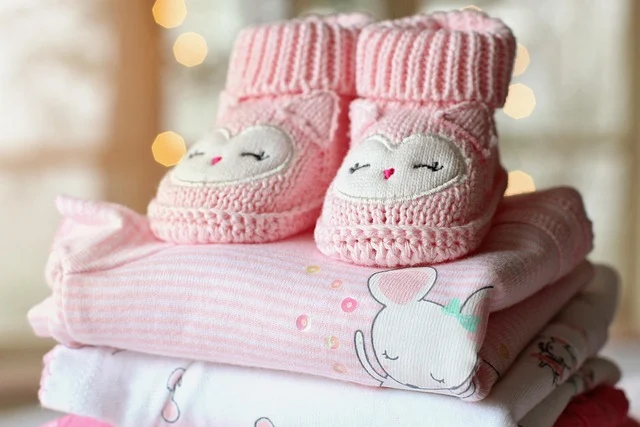
Why newborn baby garment design features matter
The practical engineering of newborn babytøj directly impacts how quickly and comfortably you can change a fussy baby. Poorly designed garments with stiff collars or back-snaps add unnecessary difficulty to middle-of-the-night routines.
1. Envelope necklines vs. Wrap/Kimono suits
Envelope necklines feature overlapping shoulders that expand widely when pulled. While designed to slide easily over a baby’s head, their primary purpose is allowing you to pull a dirty bodysuit downward over the shoulders and legs, avoiding dragging mess across the baby’s face during diaper blowouts. Wrap or “kimono” style bodysuits unsnap entirely along the front, letting you lay the baby flat and dress them without pulling anything over the head.
2. Two-way zippers vs. Press snaps
Sleepsuits equipped with two-way zippers open from the bottom up. This design lets you pull the zipper up to the waist for a night change while keeping the baby’s chest and arms covered and warm. Traditional press snaps require matching up 8 to 10 metal buttons in dark rooms, which lengthens diaper changes.
3. Fold-over mitten cuffs
Newborn nails grow fast and sharp. Sleepsuits and bodysuits with integrated fold-over cuffs act as built-in scratch mittens. They stay attached to the sleeve, preventing scratching without needing separate mittens that slide off easily.
How newborn baby poop and blowouts dictate clothing selection and laundry
Liquid newborn stool frequently leaks past diaper elastic, making garment cleanability a critical factor in clothing performance. Selecting items with high stretch and simple openings makes dealing with messy accidents significantly easier.
How to handle garment blowouts efficiently
- Unsnap or unzipper bottom fasteners immediately: If using an envelope neck bodysuit, slide the shoulders down and pull the garment down off the baby’s hips and feet.
- Rinse immediately with cold water: Warm water bakes organic protein stains into cotton fibers. Flush the affected fabric under cold running water as soon as possible.
- Treat with gentle stain remover: Apply a gentle, fragrance-free laundry soap or dedicated stain spray directly onto the spot before placing it in the laundry hamper.
Proper washing guidelines for newborn clothes
Wash all newborn babytøj separately from adult laundry using a gentle, fragrance-free, and dye-free liquid detergent. Newborn skin lacks the full natural barrier protection of adult skin, leaving it vulnerable to chemical irritants and artificial perfumes present in standard detergents.
- Temperature: Wash items in warm water at 40°C. This temperature thoroughly removes milk fats, body oils, and residual waste without destroying sensitive natural fibers.
- Rinsing: Run an extra rinse cycle to eliminate all soap residue from garment seams.
- Drying: Line drying outdoors in sunlight provides natural antibacterial action and helps fade residual stains. Tumble drying on low heat is safe for organic cotton, though high heat may shrink wool blends or unwashed cotton.
- Pre-washing: Always pre-wash brand-new clothing items prior to first wear to purge residual manufacturing finishes, excess dye, and dust accumulated during shipping.
How newborn baby temperature regulation affects fabric choices
Newborns cannot regulate their internal body temperature effectively because they do not sweat or shiver efficiently. Consequently, their clothing must naturally balance temperature by trapping heat without sealing in moisture.
| Fabric Type | Breathability | Thermal Insulation | Best Season / Usage | Care Level |
|---|---|---|---|---|
| OEKO-TEX Organic Cotton | High | Moderate | Year-round indoor base layer; sensitive skin | Machine wash 40°C, tumble dry low |
| Merino Wool | Very High | High (Self-regulating) | Winter layering, cool climate nightwear, pram rides | |
| Bamboo Blends | Very High | Low to Moderate | Summer days, warm indoor climate, prone to heat rashes | Machine wash gentle 30–40°C, line dry |
| Polyester / Synthetic Fleece | Low | High (Traps moisture) | Outerwear coats only (Avoid as base layer) | Machine wash, quick drying |
Selecting certified safe materials
Look for fabrics certified under OEKO-TEX Standard 100 Class 1 (the strict certification tier designated specifically for baby products) or the GOTS (Global Organic Textile Standard). These certifications guarantee that the fibers, dyes, snaps, and zippers are rigorously tested and entirely free from harmful heavy metals, formaldehyde, phthalates, and allergenic dyes.
Are gender-neutral newborn clothes a practical choice?
Selecting gender-neutral newborn clothes in neutral palettes—such as cream, soft grey, sage green, oat, and beige—is an extremely practical choice. Neutral tones allow you to freely mix and match bodysuits, trousers, and cardigans without color clashing. Also, gender-neutral capsule wardrobes easily transition to future siblings regardless of gender, maximizing the long-term return on your clothing investment.
Common newborn babytøj mistakes to avoid
- Buying complex outfits for early weeks: Jeans with stiff waistbands, dresses that bunch up under the arms, and hoodies that gather uncomfortably behind the neck hamper movement and complicate daily care. Stick to bodysuits and soft sleepsuits for the first month.
- Over-indexing on small sizes: Purchasing 15–20 items in size 50 often leaves unworn clothes behind once the baby experiences their first growth spurt at two to three weeks.
- Ignoring inner seams and tags: Stiff tags on the side seam or neck irritate sensitive baby skin. Choose garments with printed tags or soft, tear-away labels.
- Selecting neck-snap sweaters: Sweaters with tight necks or snaps positioned directly on the spine can press uncomfortably into the baby’s skin when laying flat in a bassinet.
Who this advice does not suit
While a standard 6–8 item capsule split between sizes 50 and 56 works well for full-term, average-weight babies, specific scenarios require adjusting this approach:

- Premature or NICU newborns: Babies born before 37 weeks or under 2.5 kg require micro-newborn sizing (sizes 40 to 44). Clothes designed for NICU stay often require specialized front-velcro openings to accommodate medical monitors and wires.
- High-weight newborns (>4.5 kg): Babies measuring in the highest growth percentiles will skip size 50 completely and require immediate entry into size 56 or 62.
- Extreme tropical climates: In consistently hot climates above 28°C, sleepsuits, knit cardigans, and wool layers are unnecessary. The wardrobe should focus entirely on lightweight bamboo or thin organic cotton bodysuits.
Source: Vogue
Related guides
Frequently asked questions
How many bodysuits does a newborn need per day?
A newborn typically uses 2 to 4 bodysuits per day due to milk spit-ups and diaper leaks. Maintaining a stock of 6 to 8 bodysuits ensures you have enough coverage for two to three days without constant laundering.
Can newborns wear short-sleeve bodysuits in winter?
Yes, short-sleeve bodysuits work excellent as insulating base layers underneath long-sleeve sleepsuits or knitted cardigans during winter. Layering allows you to adjust thermal protection easily based on indoor heating.
Should I wash newborn clothes before the baby arrives?
Yes, always pre-wash all new clothes, sheets, and blankets before first use. Pre-washing removes manufacturing residues, dust particles, and excess surface dyes that could irritate delicate newborn skin.
Do newborns really need to wear hats indoors?
Newborns lose heat rapidly through their heads during the first 24 to 48 hours after birth. A soft cotton hat is recommended immediately after delivery, but once home and inside a properly heated room, healthy full-term babies generally do not need hats indoors unless recommended by a midwife.