











Emerald Cut vs. Princess Cut Rings: Which Geometric Gem is Right for You? Choosing a diamond ring depends on your preference for shimmer versus brilliant sparkle. Key differences also exist in durability and cost per carat. Rectangular step-cut emerald cuts emphasize clarity and create a larger surface appearance. Meanwhile, square princess cuts use brilliant facets to maximize fire while masking minor inclusions.
This guide compares how these two geometric shapes perform regarding light reflection, everyday wear, visual sizing, and overall value. It also examines recommended ring settings, common purchasing mistakes, and expert advice to help you decide which diamond cut best aligns with your personal style and budget.
Emerald Cut vs. Princess Cut Rings: Which Geometric Gem is Right for You?
Before examining optical performance and physical structure in detail, the table below provides a side-by-side overview of how these two geometric diamond cuts compare across key buying criteria:
| Feature | Emerald Cut Diamond | Princess Cut Diamond |
|---|---|---|
| Facet Style | Step-cut (linear, parallel facets) | Modified brilliant cut (chevron/pyramidal facets) |
| Light Reflection | “Hall-of-mirrors” glassy flash & luster | Intense brilliance, fire, and multi-directional sparkle |
| Visual Footprint | Appears larger per carat due to elongated surface | Slightly more compact face-up footprint per carat |
| Clarity Sensitivity | High (requires VS2 grade or higher to be eye-clean) | Moderate (brilliant facets mask inclusions down to SI1/SI2) |
| Relative Cost Per Carat | Higher (lower cutting yield from rough diamond crystal) | Lower (efficient utilization of rough diamond crystal) |
| Ideal Length-to-Width Ratio | 1.30 to 1.50 (elongated rectangle) | 1.00 to 1.05 (square geometry) |
| Vulnerable Areas | Cropped corners requiring setting protection | Sharp 90-degree points requiring corner coverage |
Faceting Mechanics and Light Performance
The core difference between an emerald cut and a princess cut lies in their structural faceting. This geometry fundamentally dictates how light enters, reflects, and exits the stone.
The Emerald Cut: Step-Cut Architecture
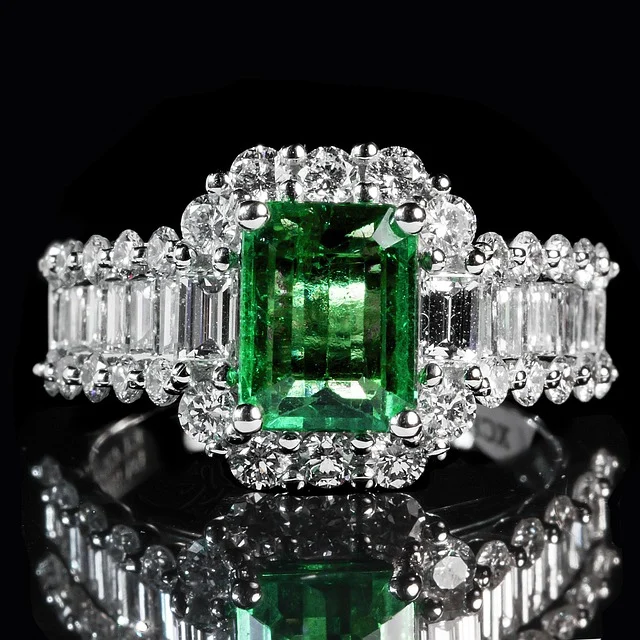
The emerald cut features rectangular step-cut facets arranged parallel to the table and the outer girdle. Rather than scattering light into tiny flashes, the long, open facets produce a “hall-of-mirrors” effect. This creates alternating planes of bright light and dark shadows. Because the large center table acts like a clear window into the diamond, step cuts showcase optical clarity and pure color rather than masking imperfections.
The Princess Cut: Modern Brilliant Geometry
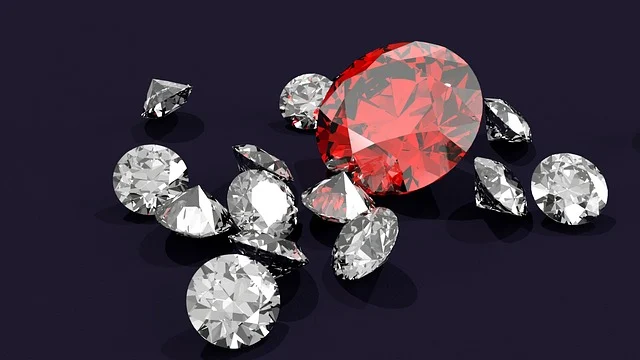
In contrast, the princess cut belongs to the family of brilliant cuts. Shaped as an inverted pyramid with a square face-up outline, a princess cut diamond typically contains between 50 and 58 facets arranged in chevron patterns along the pavilion (the lower portion of the gem). This complex arrangement breaks incoming light into small, high-intensity rays, generating exceptional fire (spectral colors) and brilliance (reflected white light). The scintillation effectively conceals minor natural inclusions and blemishes inside the stone.
Visual Sizing: Which Cut Looks Larger on the Hand?
When comparing stones of identical carat weight, visual size depends on how weight is distributed throughout the stone’s depth and surface area.

An emerald cut diamond almost always looks larger than a princess cut of the same carat weight. This visual illusion occurs for two reasons:
- Table and Surface Area Spread: Emerald cuts are cut shallower than princess cuts. A larger portion of the diamond’s carat weight is concentrated across its top surface area rather than hidden in a deep pavilion underneath.
- Elongated Silhouette: The traditional elongated shape (typically a 1.30 to 1.50 length-to-width ratio) stretches along the finger. This creates a slimming visual effect that occupies more visible real estate on the hand.
By comparison, a princess cut carries significant weight in its deep, square pyramid base. A 1.00-carat princess cut typically measures around 5.5mm by 5.5mm (roughly 30.25 square millimeters face-up area). Meanwhile, a 1.00-carat emerald cut measures around 7.0mm by 5.0mm (roughly 35.0 square millimeters face-up area). Consequently, buyers seeking maximum surface coverage per carat often lean toward the emerald cut.
Clarity and Color Sensitivity: Where You Can and Cannot Compromise
Because these cuts process light differently, their requirements for clarity and color grades diverge sharply.
Clarity Requirements
With an emerald cut, clarity is non-negotiable. The broad, transparent table facet lacks the scattered light output needed to hide internal flaws. Inclusions such as dark crystals, clouds, or feathers positioned beneath the table are easily visible to the naked eye. Therefore, emerald cuts usually require a clarity grade of VS2, VS1, or higher to guarantee an eye-clean appearance.
With a princess cut, brilliant faceting breaks up light reflections. This design makes it difficult for the eye to detect minor internal inclusions. Buyers can often safely select an SI1 or SI2 clarity grade without compromising visual purity. Consequently, more budget can be allocated toward higher carat weight or superior color grading.
Color Considerations
Both geometric cuts show color more noticeably than round brilliant cuts, but in different areas:
- Emerald Cuts: Because of their wide, open facets, color warmth is readily visible throughout the center of the stone. An F or G color grade maintains a icy white appearance in platinum or white gold settings, while H or I grades look balanced in yellow or rose gold settings.
- Princess Cuts: Body color tends to concentrate in the four sharp corners of a princess cut where the diamond is thinnest. Selecting a color grade of G or higher prevents visible tinting at the outer edges of a white metal ring.
Cost Per Carat and Cutting Yield
When evaluating market value, princess cuts are very cost-effective fancy cut diamonds. Meanwhile, emerald cuts carry a higher premium per carat for equivalent quality parameters.
This price disparity stems from manufacturing efficiency during the diamond cutting process:
- Rough Yield Efficiency: An octahedral rough diamond crystal naturally aligns with the inverted pyramid shape of a princess cut. Cutters can fashion two princess cut diamonds from a single rough crystal with minimal waste, retaining up to 80% of the original rough diamond weight.
- Material Loss in Step Cuts: Creating clean, precise step facets for an emerald cut requires trimming away larger portions of the rough stone, yielding closer to 50% of the raw material.
- Clarity Premium: Emerald cuts necessitate higher clarity grades to achieve an eye-clean surface. Consequently, the combined cost of raw stone loss and stringent clarity requirements elevates the final price tag.
Durability and Protective Ring Settings
Everyday wear demands careful attention to how geometric diamonds are set, particularly for buyers with active lifestyles.
Protecting the Emerald Cut
The emerald cut features cropped corners, designed to eliminate sharp point vulnerabilities. However, because its elongated side edges remain exposed, shielding the stone with a secure mounting remains critical. Ideal settings include:
- Bezel Settings: A custom metal rim fully encapsulates the cut edges, offering maximum security against accidental impacts.
- V-Prong Solitaires: Specialized V-shaped prongs grip the cropped corners snugly. They protect the corners while exposing the linear sides to natural light.
- Halo Settings: A surrounding border of smaller accent stones acts as a protective buffer around the center gem’s perimeter.
Protecting the Princess Cut
The princess cut features four sharp, uncropped 90-degree corners. These pointed tips represent structural stress points where micro-fractures can occur if struck directly against hard surfaces. To ensure long-term durability:
- Always choose mountings equipped with V-prongs or heavy corner prongs that fully cover all four sharp tips.
- Avoid standard round four-prong settings that leave the pointed corners bare or exposed to impact.
- Consider flush mountings or channel settings for side-stone designs to prevent edge chipping.
Step-by-Step Guide: How to Select Your Ideal Geometric Ring
Follow these steps when choosing between an emerald cut and a princess cut ring:
- Define Your Sparkle Preference: Decide whether you prefer fiery, multi-directional brilliance (princess cut) or geometric, wide-flash clarity (emerald cut).
- Establish Your Budget Baseline: Determine if your priority is maximum surface size for your spend (emerald cut) or maximum diamond weight and sparkle per dollar (princess cut).
- Set Your Minimum Clarity Threshold: If choosing an emerald cut, search strictly within VS2 and higher grades. If choosing a princess cut, search from SI1 upward to maximize budget efficiency.
- Check Proportions and Ratios:
- For an emerald cut, target a length-to-width ratio between 1.30:1 and 1.50:1 for a balanced rectangular silhouette, with a depth percentage under 70%.
- For a princess cut, target a length-to-width ratio between 1.00:1 and 1.05:1 for a true square outline.
- Pair with a Protective Setting: Select mountings with V-prongs, bezel walls, or halos engineered specifically to secure geometric edges.
Who Should (and Should Not) Choose Each Cut
Choose an Emerald Cut If:
- You appreciate vintage, Art Deco, or minimalist architectural design aesthetics.
- You prefer subtle flashes of light and high optical clarity over intense sparkle.
- You want an elongated stone shape that visually slims and lengthens the finger.
Do NOT choose an emerald cut if: You are working with a tight clarity budget or want an intense, fiery sparkle that hides minor imperfections.
Choose a Princess Cut If:
- You love maximum brilliance and sparkle contained within a sharp, modern square outline.
- You want superior value per carat and flexibility on clarity grading to maximize size.
- You want a bold geometric ring profile that combines traditional diamond fire with clean linear symmetry.
Do NOT choose a princess cut if: You prefer long rectangular proportions on the finger or dislike prongs covering the sharp corners of your center gem.
Common Purchasing Errors and How to Avoid Them
- Buying an Emerald Cut with Low Clarity Unseen: Ordering an SI2 emerald cut sight-unseen often results in visible center inclusions. Fix: Always verify eye-cleanliness via 360-degree high-definition video or stick to VS2+ clarity.
- Exposing Princess Cut Corners: Choosing a setting with tiny round prongs leaves delicate pointed corners vulnerable to chipping. Fix: Insist on specialized V-prongs or full bezel settings.
- Ignoring Depth Percentages: Selecting overly deep princess cuts traps stone weight below the girdle where it remains invisible face-up. Fix: Choose stones with total depth percentages between 68% and 75%.
- Disregarding Length-to-Width Ratios: Buying a rectangular stone without checking ratios can result in a stone that looks too wide (“chubby”) or overly narrow. Fix: Double-check measurements prior to purchase to confirm your preferred proportions.
When choosing between an emerald cut and a princess cut ring in 2026, consider your personal style, lifestyle, and budget. Both cuts offer unique beauty and value, but understanding their differences in sparkle, durability, and cost will guide you to the perfect geometric gem for your lifelong commitment.

Source: Vogue
Frequently Asked Questions
Are emerald cut diamonds more expensive per carat than princess cuts?
Yes, emerald cuts tend to be more expensive per carat than princess cuts of equal quality. This cost difference occurs because cutting rough diamonds into emerald cuts is less efficient. Additionally, their large facets showcase clarity, which often necessitates buying a diamond with a higher clarity grade.
Which cut is more durable between an emerald cut and a princess cut?
The princess cut is generally considered more durable because it features sharp, uncropped corners. In contrast, emerald cuts have cropped corners that make them more vulnerable to chipping unless you shield them using a suitable ring setting like a bezel or V-prongs.
Does an emerald cut or a princess cut look bigger on the hand?
An emerald cut usually looks larger than a princess cut of the same carat weight. This visual difference happens because the rectangular shape of the emerald cut provides a greater surface area, making the gem appear more expansive when worn on your hand.
How does the sparkle of an emerald cut compare to a princess cut?
Emerald cuts produce less intense sparkle than princess cuts, offering a glassy luster with subtle light flashes. Princess cuts are brilliant cuts designed to deliver maximum fiery sparkle, whereas emerald cuts rely on rectangular step-cut facets that emphasize clarity over intense brilliance.
What are the best settings for an emerald cut ring?
The best settings for an emerald cut include solitaire settings with protective prongs, such as V-prongs, or bezel settings. Alternatively, a halo setting can highlight the diamond’s unique beauty while offering extra protection to the stone’s vulnerable corners from daily damage.


