













The Air Jordan 2 is Nike’s 1986 luxury basketball sneaker designed by Bruce Kilgore and Peter Moore, crafted originally in Italy without a Nike Swoosh. Recognized for its faux lizard-skin accents, supportive midsole, and refined silhouette, it bridges historic NBA performance with contemporary fashion.
How does the Air Jordan 2 fit and feel on foot?
For most wearers, the Air Jordan 2 fits true to size in length, matching standard Nike sizing across the signature basketball line (see 8 Air Jordans: A Look at Iconic Sneakers for general sneaker sizing tips). However, the toe box shape is noticeably narrower and more structured than that of the Air Jordan 3 or Air Jordan 4. This narrowness stems from layered side paneling and a firm faux lizard-skin overlay that caps the midfoot, leaving minimal lateral stretch across the forefoot.
If you have wide feet, choosing a half size larger than your normal size prevents uncomfortable pinching around your pinky toe. Wearers with narrow or average-width feet should stay true to size to maintain proper heel lock, as sizing up can cause heel slip due to the smooth ankle collar lining.
Underfoot, the shoe features a firm, grounded ride. Nike constructed the midsole using dense polyurethane, enclosing an encapsulated full-length Air unit. While modern running shoes rely on soft EVA or nitrogen-infused foams, the Jordan 2 provides rigid structural arch support and shock absorption. A molded plastic external heel counter locks the rearfoot down, minimizing lateral ankle shifting during movement.
The upper uses thick full-grain leather that requires a distinct break-in period. During your first few wears, the leather along the throat and forward flex zone can feel stiff. Once broken in, the leather softens and contours naturally to your foot shape.
This shoe does not suit everyone. If you prefer lightweight mesh, ultra-plush cushioning, or high breathability, the Jordan 2 will feel heavy and warm. The leather upper lacks forefoot ventilation perforations, holding in warmth more than textile athletic shoes.
Why was the Air Jordan 2 designed in Italy without a Swoosh?
Following the commercial success of the Air Jordan 1 in 1985, Nike sought to transition Michael Jordan’s signature line from a standard high-top basketball sneaker into a high-end luxury footwear collection. Designers Bruce Kilgore, creator of the Air Force 1, and Peter Moore, co-creator of the Air Jordan 1, spearheaded the design with a focus on Italian manufacturing craft.
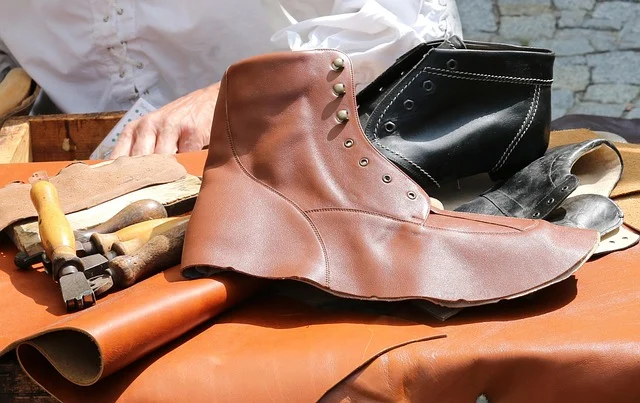
To establish a premium identity, Nike moved manufacturing of the original 1986 run to footwear factories in Italy. Italian cobblers crafted the shoe using soft full-grain leather, precise double-stitching along panel borders, and embossed faux lizard skin across the midfoot overlays. This marked the first time an athletic brand produced a performance basketball shoe using Italian artisan techniques and luxury materials.
The most radical design decision was removing the prominent Nike Swoosh from the upper entirely. Stripping the primary logo from a flagship Nike product was a bold departure from standard branding strategies. Kilgore and Moore shifted focus directly to the Air Jordan brand identity, placing the iconic Wings logo prominently on the tongue and embossing simple “Nike” block lettering across the rubber heel tab.
This Italian manufacturing and luxury positioning set the shoe’s original retail price at $100 in 1986. At a time when top-tier basketball shoes typically retailed between $60 and $75, the $100 price tag positioned the Jordan 2 as an exclusive status symbol both on the basketball court and on the street.
How did Michael Jordan perform in the AJ2 on the court?
Michael Jordan wore the Air Jordan 2 throughout the 1986–87 NBA season, returning to full-time play for the Chicago Bulls after missing 64 games during his second season due to a broken foot. The 1986–87 campaign became one of the most dominant individual statistical seasons in basketball history.
Lacing up the Jordan 2, Jordan played all 82 regular-season games and captured his first NBA scoring title, averaging 37.1 points per game. He became only the second player in NBA history, alongside Wilt Chamberlain, to score over 3,000 points in a single season. During this stretch, he recorded nine consecutive games scoring 40 or more points.
The shoe also witnessed historic moments during NBA All-Star Weekend in Seattle. Wearing the low-top variation of the Jordan 2, Jordan won the 1987 NBA Slam Dunk Contest, sealing his victory with an iconic leap from the free-throw line. On defense, he became the first player in league history to record 200 steals and 100 blocked shots in a single season.
Despite these highlights, the shoe presented distinct performance trade-offs for basketball players:
- Strengths: Strong ankle support via the stiff molded heel counter; plush ankle collar lining; durable full-grain leather upper; full-length Air unit impact protection on landings.
- Drawbacks: Rigid sole flex compared to canvas shoes; lack of forefoot flex grooves; heavier overall weight; minimal airflow through sealed leather panels.
How does the Air Jordan 2 compare to nearby Jordan models?
Evaluating where the Air Jordan 2 sits in the early Jordan line helps buyers compare its design language against the iconic Air Jordan 1 and Air Jordan 3. You can read 8 Air Jordans: A Look at Iconic Sneakers for additional historical background on these signature models.
| Feature | Air Jordan 1 (1985) | Air Jordan 2 (1986) | Air Jordan 3 (1988) |
|---|---|---|---|
| Designers | Peter Moore | Bruce Kilgore & Peter Moore | Tinker Hatfield |
| Manufacturing | Asian factories | Made in Italy (OG run) | Asian factories |
| Branding | Large Nike Swoosh on sides | No Swoosh; Wings logo on tongue | Jumpman logo on tongue; Nike Air on heel |
| Cushioning | Encapsulated heel Air unit | Encapsulated full-length Air unit | Visible heel Air unit & forefoot Air unit |
| Upper Materials | Standard leather & nylon | Full-grain leather & faux lizard print | Tumbled leather & elephant print trim |
| Fit Profile | Narrow, flat outsole, ground feel | Structured heel lock, arch support | Wider toe box, padded mid-top collar |
The Air Jordan 1 offers a flat, ground-level heel feel similar to classic court shoes, making it popular for casual wear despite light cushioning. The Air Jordan 2 shifts toward a firmer, more supportive heel platform with sculpted ankle support and smooth leather panels. The Air Jordan 3 introduced visible Air technology and elephant print overlays, balancing court functionality with distinct lifestyle styling.
If you prefer a thin sneaker that sits flat to the ground, the Jordan 1 matches that preference best. If you want exposed tech and soft tumbled leather, the Jordan 3 provides that look. The Jordan 2 suits buyers who want clean paneling, premium leather textures, and a subtle design that omits side logo branding.
What are the essential Air Jordan 2 colorways?
The Air Jordan 2 lineup includes classic original colorways from 1986 along with retro editions introduced in subsequent decades.
Original 1986 Releases
The original launch catalog kept color choices strictly focused on classic Chicago Bulls colors:
- Chicago White/Varsity Red/Black (High & Low): Features a white full-grain leather base, red heel accent, black laces, and a black polyurethane midsole. Jordan wore this colorway during his 37.1 PPG scoring run.
- White/Red (High & Low): Uses a clean white leather upper paired with red outsole accents, a red Wings logo, and a white midsole for a brighter appearance.
Notable Retro Colorways
Over the years, Jordan Brand expanded the model’s palette through general releases and lifestyle retros:
- Melo (2004 & 2018): Inspired by Carmelo Anthony’s Denver Nuggets uniform, featuring smooth white leather paired with University Blue and Taxi Yellow trim.
- Radio Raheem (2016): Uses a black leather base accented with photo blue and pink details inspired by Spike Lee’s film Do the Right Thing.
- Iron Purple (2014): Combines deep purple leather with dark concord paneling and vibrant infrared detailing.
- Craft “Atmosphere / Cement Grey” (2023): Incorporates soft suede paneling, cream midsoles, and aged trim for a subtle, retro-inspired look.
Which collaborations revitalized the Air Jordan 2?
While the Jordan 2 historically received fewer retro releases than the Jordan 1 or Jordan 4, high-profile creative collaborations introduced the silhouette to modern streetwear culture.
Off-White x Air Jordan 2 Low (2021)
Designer Virgil Abloh deconstructed the low-top model by using 3D high-resolution scans of actual game-worn shoes worn by Michael Jordan. The midsole featured simulated crumbling polyurethane encased in clear resin to capture the natural aging process of 1986 footwear. The shoe included Abloh’s signature zip-tie, exposed inner padding, and Michael Jordan’s signature printed on the lateral panel.
Just Don x Air Jordan 2 (2015–2017)
Streetwear designer Don C reconnected the Jordan 2 with its Italian luxury origins by replacing standard leather panels with quilted blue lambskin, soft suede overlays, and leather inner linings. Released in “Varsity Royal,” “Beach,” and “Arctic Orange,” these pairs came packaged with custom leather pins and premium boxes.
A Ma Maniére x Air Jordan 2 “Airness” (2022)
Luxury retail store A Ma Maniére covered the high-top silhouette in off-white cracked leather, dark burgundy heel accents, and a faux snake-print pattern across the midsole. Quilted interior linings and subtle tag branding emphasized texture over prominent logos.
Union LA x Air Jordan 2 (2022)
Union Los Angeles reimagined the high-top in “Rattan” and “Grey Fog” schemes, swapping traditional smooth leather for durable canvas, suede overlays, exposed edge stitching, and yellowed eyelets that created a utilitarian look.
J Balvin x Air Jordan 2 (2022)
Global music artist J Balvin gave the AJ2 an energetic look with electric blue ripstop nylon, cloud graphics along the heel wrap, rainbow stitching, and a battery-powered LED light-up Wings logo built into the tongue.
How to style the Air Jordan 2 for modern outfits
Styling the Air Jordan 2 requires attention to pant cut and leg width because the padded collar and solid polyurethane midsole create a substantial footprint.
When picking trousers, select straight-leg denim, wide-leg trousers, or cargo pants with a leg opening between 8 and 9 inches. These cuts drape naturally over the high collar without stacking tightly or bunching around the ankle. Avoid skinny jeans or heavily tapered joggers; tight leg openings make the high-top ankle collar look disproportionately large.
Low-top Jordan 2s style easily like classic tennis shoes. They pair clean with mid-thigh shorts, relaxed crew socks, or cropped trousers during warm months.
Because the Jordan 2 upper uses clean leather lines and minimal external branding, it fits easily into tailored outfits. Neutral colorways like “Craft” or “A Ma Maniére” complement tailored coats, wool trousers, and structured jackets. To examine how statement high-fashion silhouettes interact with modern wardrobes, see Kate Hudson’s Optical Illusion Dress: A Style Deep Dive.
How to care for, clean, and authenticate your Jordan 2
Proper maintenance protects both the structural condition and resale value of your Jordan 2 pair.
Preventing Polyurethane Sole Crumble (Hydrolysis)
Air Jordan 2 midsoles are made from molded polyurethane (PU). Polyurethane provides lasting shock absorption, but it degrades over time through a chemical process called hydrolysis. Ambient humidity breaks down the polymer bonds inside the midsole, causing vintage pairs (especially original 1986 models and early 2000s retros) to crack, crumble, and separate from the leather upper.
To slow down hydrolysis breakdown:
- Store your shoes in a climate-controlled room with moderate humidity (around 40–50%).
- Avoid storing shoes in damp basements, unventilated attics, or sealed plastic bags where trapped moisture breaks down PU foam.
- Wear your shoes occasionally. Walking compresses the internal air cells within the polyurethane, expelling trapped moisture and preserving foam flexibility.
Step-by-Step Cleaning Steps
- Remove laces and insert shoe trees: Shoe trees keep the leather upper taut while scrubbing.
- Dry brush surface dirt: Use a soft horsehair brush across the upper and tongue to remove dry dust.
- Clean the upper: Dip a soft-bristle brush into warm water mixed with mild sneaker cleaner. Scrub gently in small circles over smooth full-grain leather and textured faux lizard skin.
- Scrub the midsole and rubber tread: Use a medium-bristle brush to clear dirt from the polyurethane midsole and rubber traction grooves.
- Spot-treat suede accents: If your pair includes suede elements, clean them dry using a suede eraser and a soft nylon brush. Avoid getting water on natural suede to prevent discoloration.
- Air dry away from heat: Wipe away leftover foam with a clean microfiber towel. Let the shoes dry naturally at room temperature away from direct sunlight or heaters.
Authenticating Your Jordan 2
Counterfeit sneakers often replicate colorways well, but stumble on material quality and assembly details:
- Wings logo embossing: The Wings logo on the tongue of an authentic pair features sharp, deep stamping along the basketball ribs and feather lines. Replicas frequently show shallow or smudged detail work.
- Midfoot overlay texture: Examine the faux lizard skin pattern along the side panels. Authentic pairs feature distinct scale bumps with clean texture definitions, rather than flat stamped plastic marks.
- Heel counter rigidity: The TPU plastic heel tab should feel thick and firm, featuring clean “Nike” lettering. A soft or squishy heel tab points to poor synthetic materials.
- Stitching quality: Check the double-stitching around the toe box and midfoot panel edges. Stitch lines should remain straight and evenly spaced without loose thread ends.
Sources: Jordan. Nike.com
Frequently asked questions
What makes the Jordan 2 unique among Air Jordan models?
The Jordan 2 stands out due to its original Italian manufacturing, luxury materials like faux lizard skin, and the absence of the Nike Swoosh. It was Nike’s initial luxury crossover basketball shoe, focusing on fine leather craftsmanship and rigid structural support.
How does the Air Jordan 2 fit compared to the Air Jordan 1?
While both run true to size in length, the Air Jordan 2 features a narrower toe box and a firmer polyurethane midsole than the flat, low-profile outsole of the Air Jordan 1. Wide-footed wearers often choose a half size larger in the AJ2 for extra forefoot room.
Why do older Air Jordan 2 midsoles crumble over time?
The Air Jordan 2 uses a polyurethane midsole that gradually breaks down when exposed to atmospheric moisture in a process called hydrolysis. Wearing the shoes periodically and storing them in low-humidity environments helps extend midsole life.
Are Air Jordan 2s comfortable for everyday casual wear?
Yes, modern retro pairs offer dependable support for daily wear thanks to dense polyurethane cushioning, padded collars, and structured heel counters. The full-grain leather upper softens nicely after a short break-in period.
When was the Air Jordan 2 originally released?
The Air Jordan 2 originally debuted in November 1986 for the 1986–87 NBA season, carrying an original retail price of $100.


