











The choice between the Nike Dunk and the Air Jordan 1 comes down to style: the Air Jordan 1 delivers a sharp, premium aesthetic for elevated streetwear, while the Nike Dunk offers a casual, skate-inspired look with playful colorways. Designed by Peter Moore in 1985 and 1986, both former basketball shoes remain dominant streetwear icons with distinct personalities.
This comparison outlines their shared design history, key silhouette differences, and specific styling tips. It also details retail pricing, resale market trends, and common buying pitfalls to help you choose the right pair for your wardrobe.
Is Nike Dunks and Air Jordan 1s the same shoe?
No, while they share a designer and foundational elements, the Nike Dunk and Air Jordan 1 are distinct models. They feature different histories, design nuances, and cultural associations. The AJ1 is Michael Jordan’s signature shoe. In contrast, the Dunk originated as a college basketball shoe and later became a skate staple.
Although both sneakers debuted in the mid-1980s under Peter Moore’s direction, their trajectories diverged quickly. The Air Jordan 1 was engineered specifically for rookie Michael Jordan’s high-flying demands. It incorporated Air-Sole cushioning in the heel and a high-top collar to wrap the ankle securely. The Nike Dunk—originally introduced in 1985 as the “College Color High”—was built as a versatile team basketball sneaker for NCAA programs. Featuring bold color blocking, it matched college jerseys under the iconic “Be True To Your School” campaign. This model relied on a standard foam wedge midsole rather than encapsulated Air technology.
Which sneaker is more comfortable for everyday wear, the Dunk or the AJ1?
Generally, the Nike Dunk, especially the Dunk Low, is often considered slightly more comfortable for extended everyday wear. This is due to its rounder toe box and slightly less rigid construction. The Air Jordan 1 can feel more structured, which is great for support but might require more break-in time for some.
The flatter outsole profile and roomier forefoot of the standard Nike Dunk allow your toes to splay more naturally. They splay comfortably during long walks across urban environments. The Air Jordan 1 features a snugger, tapered fit through the toe box. A stiffer leather heel counter provides lateral stability on court surfaces. However, it requires several days of wear to fully soften around the foot.
Are Air Jordan 1s still considered stylish in 2026?
Absolutely. The Air Jordan 1 remains a timeless icon in 2026. Its classic silhouette and historical significance ensure its continued relevance in streetwear and fashion, often seen in new, exciting collaborations and colorways that keep it fresh.
The silhouette’s clean panelling allows it to cross smoothly between casual, sporty, and tailored wardrobes. In 2026, styling trends favor pairing high-top Air Jordan 1s with wide-leg trousers, relaxed wool coats, and textured knitwear. This elevates the sneaker beyond athletic heritage into contemporary smart-casual fashion.
Which sneaker is better for skateboarding, the Dunk or the AJ1?
The Nike Dunk, particularly its SB (Skateboarding) iterations, is specifically designed and widely preferred for skateboarding due to its construction, cushioning, and sole grip. While some skaters might wear AJ1s, these shoes are not optimized for the sport. They are generally too valuable and delicate for heavy use.
Nike SB Dunks include specialized modifications made specifically for board feel and impact protection, such as a padded mesh tongue, Zoom Air cushioning embedded within the sockliner, reinforced triple-stitched overlays, and durable gum or rubber soles designed to withstand grip tape abrasion.
How do the prices of Nike Dunks and Air Jordan 1s compare in 2026?
Retail prices are often similar, but the resale market sees Air Jordan 1s, especially rare or collaborative editions, frequently commanding higher prices than most Nike Dunks. However, certain sought-after Dunk SB models can also be very valuable.
At retail, standard Dunk Lows and Air Jordan 1 Lows generally occupy a similar entry price tier. Meanwhile, Air Jordan 1 High OG models sit slightly higher due to additional material volume and construction complexity. In secondary markets, limited-run AJ1 high-tops and rare SB Dunks both retain strong premium value.
What’s the main difference in appearance between a Dunk and an AJ1?
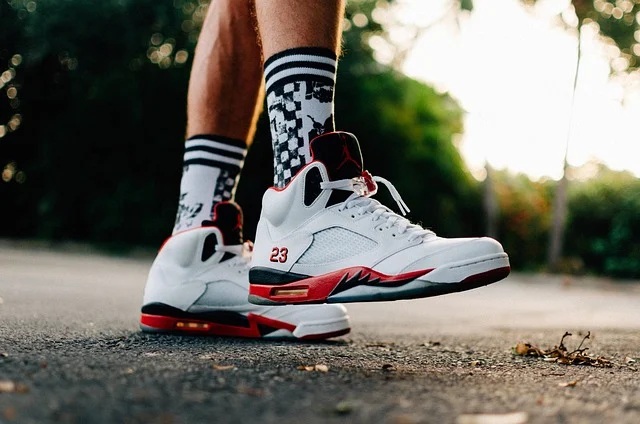
The Air Jordan 1 typically has a sharper, more athletic silhouette with a pointed toe box and a distinct ankle collar, often featuring the iconic Wings logo. The Nike Dunk, especially the Low, tends to have a rounder toe box. It has a more casual, less structured appearance, often seen in more vibrant, color-blocked designs.
Anatomical & Design Comparison
While the casual observer might confuse a Dunk Low with an Air Jordan 1 Low at first glance, several structural panels distinguish the two models:
| Design Feature | Air Jordan 1 | Nike Dunk |
|---|---|---|
| Toe Box Contour | Slightly tapered, narrower profile | Rounder, wider forefoot opening |
| Ankle Branding | Stamped “Wings” logo on upper ankle flap | Embroidered block “NIKE” text on heel tab |
| Eyestay Construction | Integrated with ankle collar strap | Independent eyelet panels overlapping the mudguard |
| Midsole Cushioning | Encapsulated heel Air-Sole unit | Standard EVA foam wedge (Zoom Air in SB models) |
| Outsole Traction | Concentric circle pivot ring with forefoot flex lines | Concentric circle pivot ring with deeper perimeter treads |
The key visual indicator sits on the upper quarter: the Air Jordan 1 features overlay straps that lace directly into the top of the ankle collar, reinforcing lateral support. The Dunk utilizes separated panel overlays that sit independently over the vamp. This gives the Dunk a looser, more adaptable flex pattern across the bridge of the foot.
Sizing, Fit, and Footbed Comfort
Choosing the correct size depends heavily on individual foot shape and the specific variation of each shoe:
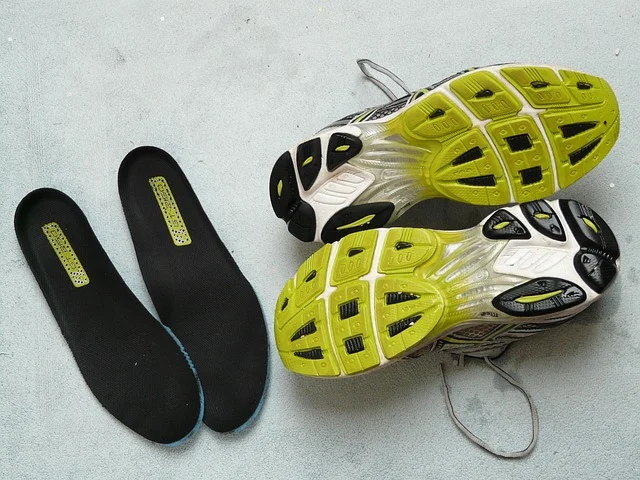
- Air Jordan 1 High / Mid / Low: Fits true to size for narrow and standard-width feet. Due to the sleeker, tapered toe box, individuals with broad feet often benefit from going up half a size to prevent side-toe pressure.
- Standard Nike Dunk Low / High: Fits true to size with a roomier fit through the toe box than the AJ1. Standard Dunks require minimal break-in time and comfortably accommodate medium-to-wide feet.
- Nike SB Dunk Low: Fits snug due to heavy collar padding and a thick stuffed tongue. It is standard practice to buy half a size up in SB Dunks compared to regular Dunks or AJ1s.
Styling Guide: Concrete Outfit Formulas
Because these sneakers carry distinct design codes, styling them effectively requires playing to their structural strengths.
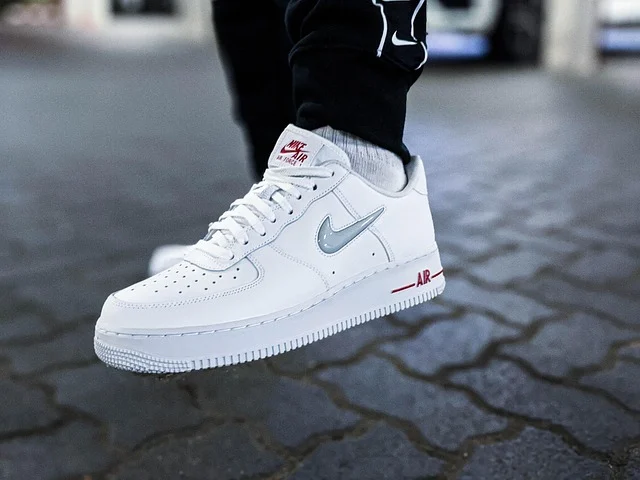
Worked Example 1: Styling the Air Jordan 1 High (Elevated Streetwear)
The structured silhouette and tall stance of the Air Jordan 1 High make it an excellent choice for balancing loose, tailored trousers or heavy outerwear.
- Top Layer: A boxy, heavyweight wool overcoat or an unlined relaxed trench coat in charcoal or camel.
- Base Layer: A plain crewneck cotton tee tucked into dark-wash selvedge denim or tailored pleated trousers.
- Bottoms: Straight-leg trousers hemmed to break softly over the upper collar of the shoe without hiding the upper eyelets.
- Sneakers: Air Jordan 1 High in a clean colorway (such as Neutral Grey, Chicago, or Shadow).
Worked Example 2: Styling the Nike Dunk Low (Casual Workwear & Everyday Wear)
The lower profile and rounder lines of the Dunk Low pair naturally with everyday casual staples, workwear, and relaxed denim.
- Top Layer: An unbuttoned heavy canvas chore coat worn over a relaxed waffle-knit long sleeve.
- Bottoms: Loose fatigue pants or wide-leg cargo pants in olive, khaki, or washed black.
- Sneakers: Nike Dunk Low featuring classic two-tone collegiate color blocking (such as Michigan State, Syracuse, or Panda).
Skateboarding Performance vs. Urban Walking
Although both sneakers originated on basketball courts, their functional performance diverges significantly on pavement and skateboard decks:
The standard Nike Dunk features a flat outsole with grippy rubber flex grooves, making it a reliable casual walking shoe. However, for actual skateboarding, the Nike SB Dunk reigns supreme. The SB variant incorporates a resilient Zoom Air unit in the heel sockliner to absorb heavy landing impacts, reinforced suede or double-stitched leather panels to resist board flick, and a thick plush tongue that keeps the foot centered during tricks.
The Air Jordan 1 can be skated—and famously was by skaters in the late 1980s—due to its durable leather uppers and high ankle protection. However, its thinner forefoot sole offers less impact dampening than modern SB footwear, making it less ideal for high-impact skating.
Common Buying Pitfalls and Problems (And How to Fix Them)
Sneaker buyers frequently encounter a few common issues with both silhouettes. Here is how to navigate them:

- Severe Toe Box Creasing: Both sneakers use leather paneling across the vamp that creases with daily foot articulation.
Fix: Insert lightweight foam crease protectors during wear, or store shoes with cedar shoe trees immediately after use to maintain vamp structure. - Heel Rubbing on AJ1 Highs: Stiff ankle collar leather can cause friction against the Achilles tendon during the first few wears.
Fix: Wear thick crew socks that extend above the collar, or unlace the top two eyelets to allow greater flex at the ankle joint. - Confusing SB Dunks with Standard Dunks: Purchasing an SB Dunk in your normal Dunk size often results in an overly tight, uncomfortable fit across the instep.
Fix: Always verify whether a model carries “SB” branding on the tongue tag. If it is an SB, order 0.5 size larger.
Who Each Sneaker Is (and Isn’t) For
Choose the Air Jordan 1 if:
- You prefer a sleek, vertical silhouette that anchors high-fashion, tailored, or elevated streetwear outfits.
- You value basketball heritage and the iconic legacy of Michael Jordan.
- You like a structured shoe that hugs the heel and ankle firmly.
Who it isn’t for: Anyone seeking ultra-soft plush foam out-of-the-box, or wide-footed wearers who dislike break-in periods.
Choose the Nike Dunk if:
- You want an easy-to-wear low-top sneaker for casual, everyday outfits.
- You prefer wider forefoot space and a soft, flexible step straight out of the box.
- You are a skateboarder needing high-impact heel protection (Nike SB).
Who it isn’t for: Wearers looking for built-in arch support or a formal, smart-casual silhouette to wear under slim suit trousers.
Selecting between the Nike Dunk and the Air Jordan 1 in 2026 offers two distinct yet equally compelling paths into iconic sneaker culture. Whether you lean towards the AJ1’s aspirational edge or the Dunk’s expressive versatility, both provide a strong wardrobe foundation. For Sarah, gallery hopping and city exploration likely called for the more refined, casual Air Jordan 1. Her choice allowed an effortless transition between different settings.
Frequently asked questions
Can you wear Air Jordan 1s with formal or smart-casual outfits?
Yes. Air Jordan 1 Highs and Lows pair well with smart-casual wardrobe pieces like tailored wool trousers, blazers, and dark denim. Choosing clean neutral colorways with minimal contrast keeps the outfit balanced and elevated.
How do you prevent toe box creasing on Dunks and Jordan 1s?
To minimize creasing, insert lightweight foam shoe shields inside the toe box during wear, or insert wooden shoe trees into the shoes immediately after removing them to help the leather retain its natural shape as it dries.
Are Dunk SBs sized the same as standard Nike Dunks?
No. Nike SB Dunks feature extra interior padding and a thick, stuffed tongue, making them feel tighter. It is recommended to go up half a size when buying Nike SB Dunks compared to standard Dunks or AJ1s.
Is the Air Jordan 1 or Nike Dunk better for wide feet?
The Nike Dunk is generally better for wide feet because it features a wider, rounder toe box profile. The Air Jordan 1 has a more tapered forefoot that can pinch wider feet unless you size up half a size.
Sources: Air Jordan, NIKE, Inc. Newsroom: Press Releases, Product Announcements and Media Resources —


