













To protect a clothing brand name legally, register it as a trademark with the USPTO. Copyright law protects creative artistic works rather than brand names or business titles. Registering your brand name under International Class 025 grants exclusive nationwide rights to use that name on apparel. This prevents competitors from selling under confusingly similar labels.
The rest of the article covers the key distinctions between copyright and trademark law in fashion, as well as how to choose a legally defendable brand name. It also outlines a step-by-step process for federal protection. This includes conducting trademark clearance searches, identifying international classifications, selecting filing bases, and submitting acceptable garment specimens.
How to Copyright a Clothing Brand Name
To protect a clothing brand name legally, register it as a trademark with the USPTO. Copyright law protects creative artistic works rather than brand names or business titles. Registering your brand name under International Class 025 grants you exclusive nationwide rights to use that name on apparel. This prevents competitors from selling under confusingly similar labels.
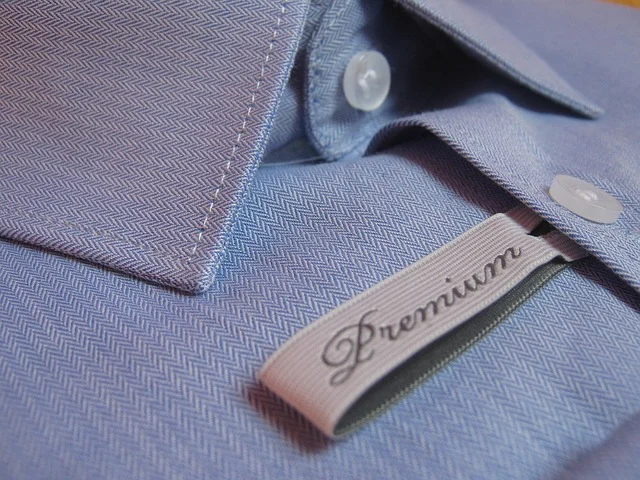
Most apparel founders initially assume copyright and trademark protection are interchangeable, or that registering a business domain protects their brand name. The reality in the commercial fashion industry is strictly defined by trademark law. Without federal trademark registration, your clothing brand remains vulnerable to copycats, forced rebrands, and costly legal disputes that can erase your marketing efforts.
Why clothing brand names require trademarks instead of copyright
The distinction between copyright and trademark law is the most common point of confusion for new fashion entrepreneurs. Copyright law, administered by the U.S. Copyright Office, protects original works of authorship fixed in a tangible medium. For an apparel business, copyright covers original artistic graphic prints and custom textile patterns. It also protects promotional photographs, video campaigns, or custom copy written for your store website.
Trademark law, overseen by the USPTO, protects brand identifiers used in commerce. This includes word names, stylized logos, slogans, and trade dress that indicate the source of goods to consumers. When launching a brand selling items sourced through dropshipping clothing suppliers or custom cut-and-sew factories, your business name functions strictly as a commercial trademark.

For example, if you design a complex line drawing printed on a hoodie, that specific drawing receives copyright protection automatically upon creation. However, the brand name printed on the interior neck label or outer hangtag requires a registered trademark to establish legal exclusivity in the apparel market. Understanding this distinction saves founders from filing expensive, incorrect legal applications.
| Legal Protection | Governing Federal Body | What It Protects in Fashion | Duration of Protection |
|---|---|---|---|
| Trademark | U.S. Patent and Trademark Office (USPTO) | Brand names, logos, slogans, hangtag marks, sub-label titles | Indefinite (if renewed every 10 years and actively used) |
| Copyright | U.S. Copyright Office | Original graphic prints, embroidery art, custom prints, website copy | Life of the author plus 70 years (or 95 years for work-for-hire) |
How to choose a strong, legally defendable clothing brand name
Before applying for legal protection, ensure your chosen brand name is legally strong enough to pass USPTO examination. The USPTO categorizes brand marks along a spectrum of distinctiveness. Generic or descriptive names are routinely rejected, while arbitrary or suggestive names receive swift approval and strong enforcement power.
- Fanciful marks: Invented words created purely to serve as a brand name (for example, “Exxon” or “Kodak”). Fanciful names offer the strongest legal protection.
- Arbitrary marks: Real English words with zero logical connection to apparel or garments. Examples include “Apple” for computers or “Obey” for street clothing.
- Suggestive marks: Words that hint at a garment’s quality or aesthetic without directly describing it. For example, “Patagonia” implies rugged outdoor utility.
- Descriptive marks: Words directly describing the garment type, material, or function, like “Soft Cotton Shirts” or “NYC Athletic Wear”. These are rejected unless you prove acquired distinctiveness over five years of active sales.
- Generic terms: Common names for products (for example, “The T-Shirt Company”). These can never receive trademark protection under any circumstances.
Are you taking online fashion design courses or preparing a business plan? Select a name that falls into the fanciful, arbitrary, or suggestive categories to maximize your legal security.
Step-by-step guide to protecting your clothing brand name
Registering your clothing brand name requires completing a formal multi-stage administrative process with federal agencies. Skipping preliminary steps often leads to unrecoverable filing fees and application rejections.
Step 1: Conduct a thorough trademark clearance search
Before submitting any application, perform a comprehensive trademark search. Confirm your name does not conflict with existing registered or pending marks. A conflict occurs when two names are phonetically similar, visually similar, or convey a similar commercial impression on related goods.
Your search must cover three specific layers:
- The USPTO Search System (formerly TESS): Search federal databases for exact word matches and alternate spellings. Also check combined words and phonetic equivalents within Class 025.
- State Business Registrations: Check corporate registries across key states to identify local businesses operating under similar unregistered names.
- Common Law Usage: Search active e-commerce platforms, social media handles, wholesale directories, and domain registries. Under U.S. law, the first business using a mark in sales gains prior “common law” rights. This applies even without federal registration.
Step 2: Identify the correct international classification of goods
Trademark applications are filed under specific trademark classes. For an apparel business, accurately identifying your classes ensures your protection covers every product you sell. You also avoid paying unnecessary government fees.
- Class 025 (Apparel): The core classification for all clothing brand names. Covers shirts, pants, jackets, dresses, hoodies, underwear, socks, footwear, and headwear.
- Class 035 (Retail and E-commerce Services): Covers online retail store services, boutique shops, and wholesale distribution of apparel.
- Class 018 (Leather Goods): Required if your brand sells leather handbags, backpacks, wallets, or luggage alongside clothing.
- Class 014 (Jewelry and Accessories): Necessary for fashion lines that sell custom jewelry, sunglasses, or luxury items covered in guides like luxury watch insurance.

Step 3: Select your application filing basis
When preparing your federal application, you must choose between two statutory bases. Your choice depends on whether your clothing line is already selling to customers:
Section 1(a) – Use in Commerce: Select this basis if you are already selling apparel across state lines or internationally. You must provide the exact date of first commercial use. Additionally, submit an acceptable physical specimen proving the mark is used on real garments sold to buyers.
Section 1(b) – Intent to Use: Select this option if you are still developing your clothing brand, establishing manufacturing with dropshipping clothing suppliers, or finalizing designs. Filing an Intent to Use application secures your priority filing date before your products officially hit the market. Once sales begin, you submit a formal Statement of Use (SOU) to finalize registration.
Step 4: Prepare an acceptable USPTO garment specimen
One of the top reasons clothing brand applications encounter refusal is submitting an invalid specimen of use. The USPTO enforces strict evidentiary rules for what constitutes acceptable proof of mark usage on apparel.
Acceptable apparel specimens include:
- Woven or printed neck tags sewn directly inside the garment showing the brand name.
- Physical cardboard hangtags attached to the garment displaying the name alongside pricing or sizing.
- Screen-printed sizing labels inside the collar area clearly visible on the finished product.
- An active e-commerce product page featuring the brand name directly next to the garment image, price, and an operational “Add to Cart” purchase button.
Unacceptable specimens that result in immediate rejection include:
- Digital Photoshop mockups or computer graphic renders of t-shirts.
- Proof of domain registration, business cards, or shipping invoices.
- Images of shipping boxes or poly mailer bags (unless you are registering a packaging service mark).
- A basic promotional poster or social media graphic without purchasing functionality.
Step 5: File the electronic application
Submit your formal application through the USPTO electronic filing portal. You must choose between standard character mark protection (which protects the plain word text regardless of font, color, or style) and design mark protection (which protects a specific stylized logo or graphic element).
Filing a standard character mark first provides broader legal protection because it prevents competitors from using your brand name in any typography, layout, or color scheme.
What does it cost to legalise a clothing brand name?
Securing legal ownership over your brand name involves fixed government processing fees alongside variable legal or research costs. Understanding these price structures prevents budgeting surprises during your brand rollout.

| Filing Approach | Government Fee (Per Class) | Legal & Search Fees | Total Estimated Investment |
|---|---|---|---|
| DIY Filing (USPTO Direct) | $250 – $350 | $0 (Self-directed search) | $250 – $350 |
| Online Filing Service | $250 – $350 | $100 – $300 | $350 – $650 |
| Trademark Attorney | $250 – $350 | $1,000 – $2,500 | $1,250 – $2,850+ |
Additional administrative costs apply at specific legal checkpoints:
- Statement of Use (SOU) Fee: $100 per class (required only for Intent to Use Section 1b filings).
- SOU Extension Request Fee: $125 per class if you need additional six-month windows to launch product sales.
- Section 8 Declaration (Years 5–6): $225 per class to maintain your active registration after five years of continuous commerce.
- Section 8 & 9 Renewal (Year 10): $525 per class every ten years to maintain perpetual protection.
DIY vs. hiring a legal professional: which path fits your brand?
Filing your own trademark application directly through the government portal appears attractive for bootstrap brand owners who manage expenses through programs like buy now pay later retail options. However, navigating legal procedural requirements alone carries significant structural risks.

Working with a dedicated intellectual property attorney significantly increases application approval rates. Examining attorneys routinely issue official communications known as “Office Actions” raising technical objections or substantive legal refusals (such as likelihood of confusion or mere descriptiveness). A licensed attorney formulates precise legal arguments to overcome these refusals.
For budget-conscious founders selling niche apparel products like specialized wide-fit dress shoes or boutique streetwear, a DIY approach can work provided you conduct rigorous preliminary search work, choose a highly distinctive non-descriptive name, and strictly adhere to specimen guidelines.
Common brand name protection mistakes to avoid
Apparel companies lose trademark rights or waste legal funds through preventable errors during naming, filing, and enforcement stages.

1. Confusing domain availability with trademark ownership
Buying a `.com` domain name or securing handles across Instagram and TikTok grants zero legal ownership over that brand name. A trademark owner with prior federal rights can initiate a Uniform Domain-Name Dispute-Resolution Policy (UDRP) proceeding to seize your website domain if your shop name infringes on their mark.
2. Altering your mark format after registration
If you register a design mark containing a specific stylized logo alongside your brand name, you must use that exact layout continuously on product packaging and labels. Making major alterations to your logo design creates a commercial disconnect that can invalidate your registration during statutory renewal periods.
3. Failing to police your brand in the open market
The USPTO does not police the marketplace for trademark infringement. The burden of enforcing your brand rights rests entirely on you. Allowing competitors to use confusingly similar names without taking legal action weakens your mark’s distinctiveness over time, a legal risk known as “trademark dilution.”
Extending protection to international fashion markets
Federal USPTO trademark protection applies exclusively within the borders of the United States. If your clothing brand manufactures garments overseas or ships products to international customers, local copycats can lawfully register your brand name in target foreign jurisdictions unless you file international applications.

To protect your clothing brand globally, you have two primary mechanisms:
The Madrid System: Administered by the World Intellectual Property Organization (WIPO), the Madrid Protocol allows U.S. trademark owners to file a single international application extending protection into over 120 member countries, including the EU, UK, Canada, Japan, and China.
Direct Foreign Filing: For countries outside the Madrid Protocol, you must hire local legal counsel to submit individual applications directly to national IP registries (such as the European Union Intellectual Property Office or the UK Intellectual Property Office).
Sources: Fashion design copyright
Frequently asked questions
Can I copyright a clothing brand name instead of trademarking it?
No, you cannot copyright a brand name. Copyright law explicitly excludes short phrases, business names, slogans, and titles, leaving trademark registration with the USPTO as the sole legal mechanism for brand name protection.
How long does it take to register a clothing brand name trademark?
The trademark registration process typically takes between 8 to 14 months from the initial filing date. Applications facing complex Office Actions or third-party oppositions during publication can take 18 to 24 months to finalize.
What is the difference between standard character marks and design marks?
A standard character mark protects the plain wording of your clothing brand name across all fonts, styles, and layouts. A design mark protects a specific stylized logo or graphic representation of your brand name.
Can two different brands use the exact same name?
Yes, two businesses can use identical names if they sell completely unrelated goods or services that create no likelihood of consumer confusion. However, within the apparel industry, using an identical name to an active clothing brand is an immediate trademark infringement.
How do I stop someone from selling clothes under my registered brand name?
If an unauthorized party sells apparel using your trademarked name, your attorney can issue a formal cease-and-desist letter. If they refuse to comply, you can file takedown requests on e-commerce marketplaces or pursue a legal suit in federal court for damages and injunctive relief.


