













A d cup represents a four-inch difference between your full bust measurement and your ribcage band size. It defines breast volume rather than a fixed breast shape or size. Because cup volume scales proportionally with band size, a 32D holds significantly less physical cup volume than a 38D despite sharing the same letter assignment.
Understanding how cup size functions prevents common fit mistakes, such as buying small cups or loose bands. Finding your true size depends on measuring your torso accurately. You must recognize your unique breast shape and choose bra constructions that support your body frame.
What does a d cup actually mean?
In bra construction, cup letters do not represent fixed volumetric measurements on their own. Instead, a d cup indicates that your over-the-bust measurement is four inches larger than your underbust measurement when using inches.
For example, your baseline bra size is a 32D if your underbust measures 32 inches and your fullest bust measures 36 inches. If your underbust is 36 inches and your bust is 40 inches, your baseline size is 36D. The four-inch differential remains identical. However, actual breast tissue volume in a 36D bra is substantially larger than in a 32D bra. This occurs because the base of the bra cup expands with a larger band size.
Many people assume a d cup automatically signifies a very large bust. In reality, a d cup on a small frame (such as a 28D or 30D) represents a compact, modest bust volume. On a wider frame (such as a 38D or 40D), the same letter reflects a fuller, broader distribution of breast tissue.
- A 4-inch difference between bust and band equals a standard D cup.
- Cup volume is relative: cup sizes expand as band sizes increase.
- Breast density and tissue height affect how a D cup looks on different body frames.
- The band provides approximately 80 percent of the bra’s total structural support.
How band size alters d cup volume
To understand why bra sizes behave this way, consider how bra manufacturers scale patterns. When a designer scales up a bra band from size 30 to 38, wire perimeter expands. The depth of a D cup must also expand to sit comfortably against a wider chest wall.
As a result, a 30D, 32D, 34D, 36D, 38D, and 40D each hold a completely different physical volume of breast tissue. If you were to pour liquid into the molded cups of these bras, the liquid capacity would increase noticeably with each step up in band size.
This scaling relationship explains why switching band sizes without adjusting your cup letter changes how the bra fits your breasts:
- 30D: Designed for a 30-inch underbust and a 34-inch bust. Holds a small volumetric cup capacity.
- 32D: Designed for a 32-inch underbust and a 36-inch bust. Holds modest overall volume.
- 34D: Designed for a 34-inch underbust and a 38-inch bust. Represents average bust distribution.
- 36D: Designed for a 36-inch underbust and a 40-inch bust. Holds moderate to large volume.
- 38D: Designed for a 38-inch underbust and a 42-inch bust. Holds substantial tissue volume across a broad root.
- 40D: Designed for a 40-inch underbust and a 44-inch bust. Offers broad cup wire coverage and deeper volume capacity.
If your band feels loose, dropping down a band size while staying in a D cup will result in a cup that is too small. For instance, moving from a loose 36D to a 34D actually reduces your cup volume by one full step.
How do you measure yourself for a d cup at home?
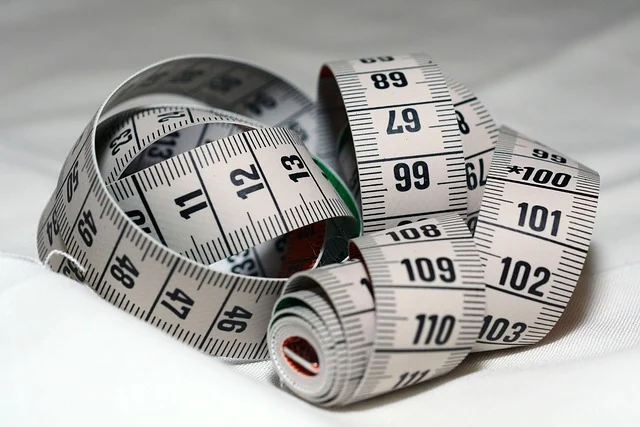
Measuring yourself correctly requires a flexible fabric measuring tape. You also need an unpadded bra (or no bra if self-supporting) and a mirror to check tape placement.
Step 1: Measure your underbust band size
Stand up straight and wrap the measuring tape directly under your bust. Place it around your ribcage where the bra band sits. Keep the tape parallel to the floor, pull it snug without pinching, exhale fully, and note the measurement in inches.
If your underbust measurement is an even number (such as 32 inches), that is your base band size. If your measurement is an odd number (such as 33 inches), round down to 32 or up to 34 depending on your preference for tightness and muscle structure around your ribcage.
Step 2: Measure your fullest bust measurement
Wrap the measuring tape around the fullest part of your bust, typically across the nipples. Hold the tape loosely enough to rest against your skin without depressing breast tissue, keeping it level across your back.
If your breasts have softer tissue or hang lower, lean forward at a 90-degree angle. This position lets your breast tissue hang perpendicular to the floor. Measure around the fullest point now to capture full volume accurately.
Step 3: Calculate the differential
Subtract your underbust band measurement from your bust measurement. Each full inch of difference corresponds to one cup letter increment:
- 1 inch difference: A cup
- 2 inch difference: B cup
- 3 inch difference: C cup
- 4 inch difference: D cup
- 5 inch difference: DD cup (or E cup in international sizing)
If your underbust is 34 inches and your bust is 38 inches, the 4-inch difference confirms a 34D bra size.
Step 4: Verify the physical fit
Measurements provide a starting baseline, but actual fit depends on bra construction. Put the bra on using the “scoop and swoop” method. Reach into each cup, scoop your breast tissue from under your armpits forward, and settle it inside the wire cup.
Check that the center gore (the fabric bridge between the cups) rests flat against your sternum. The underwire should frame your breast root along the ribcage without resting on soft breast tissue at the sides.
How does d cup sizing differ internationally?
Bra sizing conventions vary significantly around the world. A D cup in North America and the United Kingdom shares similar volume definitions. However, continental European, French, and Asian brands calculate cup letters and band sizing using different metrics.
In the United States and the United Kingdom, band sizes use inches, and cup letters advance in one-inch increments (A = 1″, B = 2″, C = 3″, D = 4″). A US 34D and a UK 34D are identical in size.
In European (EU) sizing, band sizes are expressed in centimeters, derived by subtracting 15 cm from the actual body measurement or converting directly. EU cup letters increase in 2-centimeter increments. A US/UK 34D converts to an EU 75D.
In French (FR) sizing, the band size adds 15 cm to the EU band measurement. A 34D in the US/UK converts to an FR 90D.
In Japanese (JP) sizing, cup volume increments are tighter (roughly 2.5 cm per step) and bands run snug. Japanese bras often run one to two cup sizes smaller than US/UK sizing. A person who wears a US 34D may need a JP 75E or 75F depending on the manufacturer.
Understanding bra sizing systems across regions is essential when ordering foreign brands.
| Region | Equivalent Band Size | Equivalent Cup Size | Band Measurement Reference |
|---|---|---|---|
| US / UK | 34 | D | 34 inches (86.5 cm) underbust |
| EU (European) | 75 | D | 75 cm underbust rating |
| FR (French) | 90 | D | 90 cm band rating |
| JP (Japanese) | 75 | E / F | Tight band fit, smaller cup depth |
| AU / NZ | 12 | D | Uses dress sizing for band rating |
When should you use sister sizing for a d cup?
Sister sizing is the system of finding equivalent cup volumes across different band sizes. Cup volume scales with band dimensions. Therefore, going up one band size while dropping one cup letter maintains the same internal cup volume.
If a 36D bra feels comfortably roomy in the cups but the band slides up your back on the tightest hook, you need a smaller band size. To maintain the exact same cup volume in a 34 band, you must go up one cup letter to a 34DD.
Conversely, if a 34D band feels uncomfortably tight around your ribcage but the cup containment is perfect, you move up to a 36 band and step down one cup letter to a 36C. Sister sizes allow you to fine-tune band tension without losing the breast volume room you require.
Common D cup sister size equivalencies
- For a 32D: Sister sizes are 30DD (smaller band, larger cup letter) and 34C (larger band, smaller cup letter).
- For a 34D: Sister sizes are 32DD (smaller band) and 36C (larger band).
- For a 36D: Sister sizes are 34DD (smaller band) and 38C (larger band).
- For a 38D: Sister sizes are 36DD (smaller band) and 40C (larger band).
Trade-offs of using sister sizes
While sister sizes preserve volume, they change how a bra sits on your body. A larger band sister size (like moving from 34D to 36C) has wider set shoulder straps and a broader wire perimeter, which may feel loose or slip off narrow shoulders.
A smaller band sister size (like moving from 36D to 34DD) offers firmer back support. It brings the shoulder straps closer together, but it places greater tension around your ribcage. Use sister sizing to solve specific band tight or loose issues. Avoid shifting more than one band size away from your measured dimensions.
How does breast shape impact d cup fit?
Two individuals with identical 34D measurements can look vastly different and require completely different bra styles due to breast tissue distribution and root shape.
Shallow vs. projected breasts
Shallow breasts distribute tissue over a wide area across the chest wall, sitting relatively flat with less forward projection. A person with shallow 34D breasts may feel that standard 34D cups gape at the top, even though the total volume matches. They suit demi-cup, balconette, or shallow T-shirt bras.
Projected breasts extend outward from the chest wall with a narrower root base. A person with projected 34D breasts needs deeper cups with vertical seams to prevent the bra wire from getting pushed down away from the ribcage.
Wide-set vs. close-set breasts
If your breasts sit wide apart with more than two fingers of space between them (East-West position), wide-wired balconette or side-support bras keep tissue focused forward without squeezing center tissue.
If your breasts sit close together with minimal space on the sternum, high center gores can dig into breast tissue. Plunge bras with low center bridges prevent center wire discomfort.
Bell-shaped and bottom-heavy breasts
Breasts that are fuller at the bottom than at the top require bras with cup coverage that holds bottom tissue without leaving empty space in the upper portion of the cup. Unlined three-part cut-and-sewn bras or balconette styles conform to bottom fullness better than stiff molded foam cups under fitted clothing.
Which bra styles work best for a d cup?
Choosing the right style depends on your daily activity level, clothing silhouette, and breast shape requirements.

Full-coverage bras
Full-coverage bras feature tall center gores and deep cups that enclose almost the entire breast volume. They prevent tissue from bulging over the top and offer excellent structural stability for active workdays. They suit top-heavy or softer breast tissue best.
Balconette and demi-cup bras
Balconette bras feature cups cut horizontally across the bust with wide-set straps. They lift breast tissue from the bottom, creating a rounded, uplifted shape without covering the top half of the bust. They suit shallow to average projection and wider shoulders.
Plunge bras
Plunge bras use angled cups and a low center bridge to accommodate deep V-necklines. They push breast tissue slightly inward and forward, providing natural cleavage without sacrificing cup volume containment.
High-impact sports bras
For athletic activities, sports bras for D cups should use encapsulation construction rather than pure compression. Encapsulation sports bras feature separate inner cups that isolate and support each breast individually, reducing movement effectively compared to compression tops that flatten tissue against the chest.
Wireless bras
Modern wireless bras designed for D cup sizes rely on reinforced underbust bands, wide side wings, and molded high-density foam cups to deliver support without underwires. They are ideal for lounging, travel, or post-operative wear where rigid wires cause irritation.
How do you fix common d cup fit problems?
When a D cup bra feels uncomfortable, specific visual cues reveal what needs adjustment:

Cup gaping at the top
Cup gaping occurs when the cup volume is too large, the cup style is too deep for shallow tissue, or the bra is a stiff molded style that does not contour to your natural curve. Try a lower-coverage balconette style, switch to unlined fabric cups, or step down to a C cup if your measurements fluctuate.
Spillage over the edges
Spillage happens when breast tissue overflows the top or sides of the wire. This indicates the cup volume is too small or the band is pulling the cups flat. Scoop and swoop tissue into the cup first. If spillage remains, increase your cup size to a DD or move to a lower band sister size with a larger letter (such as moving from 36D to 34DD).
Underwire digging or resting on tissue
Underwire digging occurs when the wire width is too narrow for your breast root, or the band is too tight, forcing the wire into the ribs. Choose brands with wider underwires, increase the band size, or try flex-wire styles.
Floating center gore
A floating center gore occurs when the cups are too shallow or small, forcing the entire bra forward away from your sternum. Increase the cup size to DD or select a style with deeper cup projection.
Shoulder straps slipping or digging in
Shoulder strap pain happens when the back band is too loose, forcing the shoulder straps to carry the weight of the breasts rather than the band. Reduce your band size (e.g.
How does a d cup compare to adjacent cup sizes?
Navigating adjacent cup sizes requires understanding subtle volume differences. Moving between a C, D, and DD cup represents a one-inch difference in total chest circumference per step:
- C Cup: Represents a 3-inch difference between bust and band. Ideal for slightly less forward projection or narrower breast roots.
- D Cup: Represents a 4-inch difference between bust and band. Standard balanced proportion for moderate breast volume.
- DD Cup (E Cup): Represents a 5-inch difference between bust and band. Provides an extra inch of forward depth or broader side coverage.
If you experience slight spilling in a D cup during specific times of your menstrual cycle, keeping a DD cup on hand for hormonal fluctuations ensures comfort without squeezing tissue. If you lose weight and notice gaping in your D cup cups while the band remains firm, transitioning down to a C cup restores smooth lines under clothing.
Sources: 2026 FIFA World Cup Group D
Frequently asked questions
What does a D cup look like?
A D cup represents a 4-inch difference between bust and band measurements, so its appearance varies depending on body frame. On a 30 band size it appears compact and modest, while on a 38 band size it appears substantially fuller.
Is a D cup considered a large bra size?
A D cup is considered a medium or average cup size in modern sizing scales. Because cup volume depends on band size, a 32D is relatively small, whereas a 40D holds greater overall tissue volume on a broader frame.
How do I know if I need a D cup bra?
You need a D cup bra if your fullest bust circumference measures exactly four inches larger than your snug ribcage underbust measurement. If your underbust measures 34 inches and your bust measures 38 inches, a 34D is your starting baseline size.
What is the sister size for a 34D bra?
The primary sister sizes for a 34D bra are 32DD (for a tighter band with equal cup volume) and 36C (for a looser band with equal cup volume). Shifting between these sizes maintains consistent internal cup capacity.
Why does my 36D bra gape at the top of the cups?
Cup gaping in a 36D usually occurs when the bra cup style is too deep for your natural breast shape or when the band is too loose. If your tissue is bottom-heavy, unlined balconette bras will fit smoother than stiff molded T-shirt bras.


