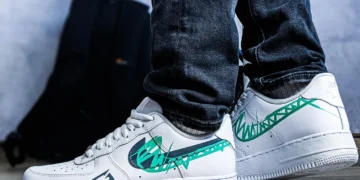




Released in 1985, the Jordan 1 features a simpler leather construction. By contrast, the 1989 Jordan 4 introduces a layered, performance-inspired aesthetic with mesh netting and a bulkier profile. Both silhouettes carry immense cultural significance and command high resale values on the secondary market.
The rest of this guide details core distinctions between these two footwear legends. We examine design materials, comfort, historical impact, 2026 market values, styling tips, and expert advice for choosing your pair.
Design and Technical Construction Differences
Understanding design differences between the Air Jordan 1 and Air Jordan 4 requires looking at basketball footwear’s technological transition from 1985 to 1989.
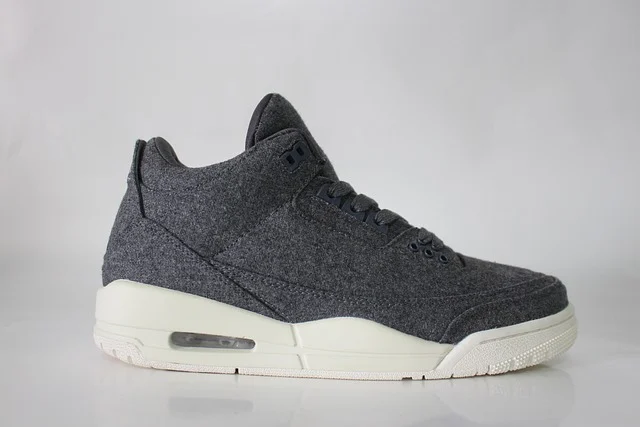
The Air Jordan 1, designed by Peter Moore, was constructed as a traditional, high-top basketball shoe built around simplicity and ground feel. It features a flat rubber cupsole, smooth leather paneling, an ankle Wings logo, a stitched Nike Swoosh, and a perforated toe box. Its internal cushioning relies on a low-profile encapsulated Air unit embedded inside the heel of the rubber cupsole.
The Air Jordan 4, designed by Tinker Hatfield, represented a dramatic architectural shift toward high-performance functionality. Hatfield introduced lightened synthetic mesh netting over molded TPU quarter panels and tongue sections for better breathability. Plastic lace wings on the sides allow customizable lockdown lacing. He also included molded lace locks at the eyelet stays. Underfoot, a thick polyurethane midsole anchors the outsole, featuring a visible Air-sole heel window and an encapsulated forefoot Air unit.
| Design Feature | Air Jordan 1 | Air Jordan 4 |
|---|---|---|
| Debut Year | 1985 | 1989 |
| Primary Designer | Peter Moore | Tinker Hatfield |
| Cushioning Setup | Encapsulated heel Air unit inside rubber cupsole | Visible heel Air unit + forefoot Air unit in polyurethane midsole |
| Upper Construction | Leather paneling with minimal synthetic reinforcement | Leather/suede with over-molded mesh netting and TPU wings |
| Ankle Support | Standard padded high-top collar | Sculpted collar with triangular plastic wing support harnesses |
| Outsole Structure | Flat rubber cupsole with concentric pivot circle pattern | Multi-directional herringbone traction with sculpted heel edge |
| Midsole Material | Solid rubber cupsole enclosure | Polyurethane foam (susceptible to long-term hydrolysis) |
Comfort, Cushioning, and Underfoot Support
When deciding between these models for everyday wear, underfoot feel and ankle lockdown vary significantly based on their mechanical design.
Air Jordan 1 Comfort Profile
The Air Jordan 1 provides a firm, flat, close-to-the-ground feel. Because the rubber cupsole houses only a small embedded heel Air unit, impact absorption is minimal by modern standards. However, this flat base offers high lateral stability. That makes it comfortable for wearers preferring board feel or minimalist soles over soft foam padding.
Air Jordan 4 Comfort Profile
The Air Jordan 4 delivers greater impact attenuation than the Air Jordan 1 in a comparison of both models. Every step landing on the heel compresses the visible Air chamber, dampening shock during long walks. The tradeoff comes in shoe weight and flexibility: the AJ4 is heavier and stiffer through the arch.
Sizing, Fit, and Foot-Type Practical Scenarios
Choosing the correct size differs between silhouettes based on foot width, instep height, and toe box shape.
- Narrow to Normal Feet: Both silhouettes run True to Size (TTS) for standard foot shapes.
- Wide Feet: The Air Jordan 1 generally fits well True to Size, though the forefoot may feel slightly snug until the leather breaks in. The Air Jordan 4 runs tight across the pinky toe area due to internal forefoot stitching and side panel reinforcement. Going up a half size (0.5 size) is widely recommended for wide feet.
- High Arches: The Air Jordan 4 provides better arch structure through its sculpted midsole shape. The flat footbed of the Air Jordan 1 may require an aftermarket orthotic insole for arch support.
Practical Scenarios
Scenario A: All-Day Standing or Walking (10,000+ Steps)
If you are spending extended hours standing on hard concrete or walking long distances, the Jordan 4’s polyurethane midsole and visible Air cushioning offer far better shock attenuation than the flat cupsole of the Jordan 1.
Scenario B: Driving, Casual Commuting, and Quick Outings
For shorter outings or driving, the Jordan 1 excels. Its lightweight build, pedal feedback, and supple ankle collar make it effortless to wear without feeling encumbered by heavy footwear.
Common Wear Problems and Step-by-Step Fixes
Problem 1: Jordan 4 Lateral Pinky Toe Pinch
The plastic wing anchors and forefoot stitching on the Air Jordan 4 frequently press into the lateral side of the pinky toe during the initial break-in period.
- Unlace the sneaker entirely down to the bottom eyelet to eliminate initial factory tension.
- Relace the shoe loosely through the lower eyelets, allowing the forefoot leather room to flex outwards.
- Wear thick athletic socks for the first 4 to 6 wears to buffer foot friction against the interior lining.
- If pressure continues, insert a shoe stretcher into the forefoot for 24 hours targeting the lateral seam.
Problem 2: Jordan 1 Toe Box Creasing and Heel Slippage
The smooth leather toe box on the AJ1 is prone to deep creasing across the flex zone. Loose top lacing can also cause heel slippage.
- Insert breathable, foam-backed crease protectors into the toe box prior to wear.
- Thread the laces through the final top eyelet on the ankle collar to cinch the heel firmly against the back counter.
- Store the shoes with solid cedar shoe trees after wearing to absorb moisture and preserve shape.
Problem 3: Jordan 4 Heel Tab and Wing Chafing
The stiff molded TPU heel pull tab or plastic lace wings can rub against the Achilles tendon or ankle bones when wearing short socks.
- Always wear crew socks or socks that extend at least one inch above the top ankle collar of the AJ4.
- Adjust the top lace wing position by lacing through the inner wing holes rather than the outer holes to draw the plastic tabs flush against the upper material.
Versatility and Outfit Styling Guide
Styling the Air Jordan 1
The slender, streamlined silhouette of the AJ1 makes it extremely adaptable across different fashion styles:
- Slim and Straight-Leg Denim: Pant legs drape naturally over or sit right above the high-top collar without creating unsightly bulk.
- Tailored Trousers and Chinos: The clean leather panels fit smoothly into elevated smart-casual outfits.
- Shorts: Because of its slim profile, the AJ1 pairs easily with mid-thigh or knee-length casual shorts. It will not overwhelm lower leg proportions.
Styling the Air Jordan 4
The muscular architecture and technical overlays of the AJ4 require balanced styling to complement its wider footprint:
- Baggy Denim and Wide-Leg Cargo Pants: Wider pant openings rest comfortably over the padded tongue and wings, balancing the bulk of the shoe.
- Fleece Sweatpants and Streetwear: The bold, athletic look matches naturally with heavy-gsm hoodies, sweatpants, and technical outerwear.
- Shorts with Crew Socks: To wear AJ4s with shorts successfully, pair them with thick crew socks. This balances the sneaker’s heavy base profile.
Durability, Aging, and 2026 Market Dynamics
Sole Integrity and Hydrolysis
A critical technical distinction between these two models lies in how their midsoles age over time:
The Air Jordan 1 uses a rubber cupsole. Vulcanized and molded rubber outsoles do not break down through hydrolysis (chemical breakdown caused by environmental moisture). An Air Jordan 1 can remain wearable for 15 to 20+ years, making vintage pairs functionally durable.
The Air Jordan 4 utilizes a polyurethane midsole foam. While polyurethane provides superior impact cushioning, it reacts with atmospheric moisture over time. After 8 to 12 years—especially if stored unworn in sealed plastic boxes—polyurethane midsoles begin to crack, crumble, and separate from the upper, requiring complete midsole restoration or resoling.
2026 Resale Market Trends
In 2026, both models remain premier commodities on the secondary sneaker market, but value trends differ based on release category:
- Original Colorways (OGs): Original 1985 AJ1 colorways (such as Chicago or Bred) and original 1989 AJ4 colorways (such as White Cement or Bred) command premium prices, with historical provenance driving top valuation.
- Collaborations: High-profile joint releases on the AJ4 (e.g., KAWS, Travis Scott, Union LA) often generate higher short-term secondary market premiums than standard AJ1 retros due to current consumer preference for chunkier 1990s silhouettes.
- General Releases: Standard retro colorways for both models sell out quickly, but the AJ4 currently experiences slightly faster retail sell-out rates across general releases worldwide.
Who Each Shoe Suits (and Who It Does Not Suit)
Choose the Air Jordan 1 If:
- You want a timeless, lightweight sneaker that effortlessly matches almost any outfit.
- Next, you prefer a flat, grounded, board-feel footbed rather than thick foam cushioning.
- You want a durable sneaker whose rubber sole will not crumble or disintegrate over a decade of ownership.
- Also, you have narrow to regular-width feet and want an easy break-in process.
Who Should NOT Buy the Air Jordan 1:
Avoid the AJ1 if you require pronounced arch support, heavy shock absorption, or soft underfoot foam for high-impact walking or prolonged standing on concrete floors.
Choose the Air Jordan 4 If:
- You prefer bold, complex, technical footwear designs with eye-catching details like mesh paneling and visible Air windows.
- You prioritize underfoot cushioning and heel impact absorption for extended walking.
- Your wardrobe consists primarily of wide-leg denim, cargos, sweatpants, and streetwear silhouettes.
- You want a substantial shoe with strong lateral support and ankle lock.
Who Should NOT Buy the Air Jordan 4:
Avoid the AJ4 if you have very wide feet and dislike forefoot lateral pressure, if you prefer low-profile lightweight shoes, or if you exclusively wear slim-fit trousers that cannot fit over a bulkier collar.
Frequently asked questions
Which is more comfortable, Jordan 1 or Jordan 4?
The Air Jordan 4 is generally considered more comfortable due to its enhanced cushioning with visible Air units and a more supportive construction, ideal for all-day wear. The Jordan 1 offers a more minimalist, grounded feel which some prefer for casual outings.
What is the resale value difference between Jordan 1 and Jordan 4?
Both models command high resale values, as seen in a Jordan 1 vs Jordan 4 comparison. However, particularly limited or unique Jordan 4s can also reach extraordinary values, sometimes exceeding common Jordan 1s.
Is the Jordan 1 or Jordan 4 better for basketball performance?
While both were originally designed for basketball, as of 2026, neither is recommended for serious modern basketball performance. The Jordan 4 offers better cushioning and support than the Jordan 1. Contemporary basketball shoes have far advanced technology for today’s game.
Which silhouette is more versatile for styling?
The Jordan 1 is generally more versatile due to its simpler, sleeker design. This allows it to pair with a wider range of outfits, from casual to slightly more dressed-up looks. The Jordan 4 has a bolder, more athletic aesthetic that pairs best with streetwear-focused ensembles.
When were the Air Jordan 1 and Air Jordan 4 released?
Then, the Air Jordan 1 was first released in 1985, marking the beginning of the Air Jordan line. The Air Jordan 4 followed four years later, debuting in 1989.
Are Jordan 4s harder to find than Jordan 1s?
This depends heavily on the specific colorway and whether it’s a retro release or an original. Jordan Brand releases many variations of both silhouettes annually. A Jordan 4 vs Jordan 1 comparison shows rare OG models or limited collaborations are hard to find, but general retro releases of both are widely available through authorized retailers and resale markets.
Conclusion: Making Your Choice
The Jordan 4 vs Jordan 1 comparison reveals two distinct yet iconic pillars of sneaker culture. The Jordan 1 offers unparalleled versatility and historical weight as the original major shift. It is a timeless choice for everyday wear and a cornerstone of any collection. The Jordan 4, a testament to design innovation and performance enhancement, provides superior comfort. It has a bolder aesthetic that appeals to those who appreciate its technological advancements and cultural impact.
Both silhouettes continue to be celebrated through new releases and retros, cementing their status. Your choice between the two should be guided by your personal style, comfort preferences, and collecting goals. Whether you lean towards the foundational legacy of the AJ1 or the progressive design of the AJ4, you’re investing in a piece of history that continues to shape fashion and culture.
Source: Vogue