





When you build a clean jewelry collection to layer with heavy graphic tees or sharp outerwear, understanding the underlying build of your chains, rings, and pendants prevents immediate fading and green skin. While both options provide the direct aesthetic of solid gold at a fraction of the cost, their construction standards dictate how long they last in your weekly rotation.
What is the difference between gold vermeil and gold plated?
Gold vermeil requires a solid 925 sterling silver core coated with at least 2.5 microns of gold that measures at least 10 karats in purity, whereas generic gold plated jewelry uses cheaper base metals like brass with electroplated gold layers as thin as 0.175 microns.
The distinction between these two finishes comes down to federal regulations and core structural integrity. Under U.S. Federal Trade Commission (FTC) standards (16 CFR § 23.4), a brand cannot legally label an item as gold vermeil unless it hits three precise criteria: a 925 sterling silver core, a gold purity of 10K or higher, and a uniform gold layer measuring at least 2.5 microns thick. This thickness creates a substantial shell of precious metal over another precious metal.
Standard gold plated jewelry operates under far looser manufacturing restrictions. Manufacturers electroplate a quick flash layer of gold—often between 0.175 and 0.5 microns—over common industrial metals like brass, nickel, copper, or stainless steel. Because raw gold prices fluctuate, many producers cut costs by minimizing this outer plating layer. Once that paper-thin coating rubs off against your clothes, the reactive base metal touches your skin directly.

Gold vermeil vs gold plated comparison breakdown
Gold vermeil provides superior gold thickness, high hypoallergenic safety, and solid precious metal value. Meanwhile, standard gold plated pieces remain budget-focused items with thin coatings that wear away under frequent friction.
Comparing these materials directly helps you decide where to spend your money depending on how often you wear your accessories. Below is a concise comparison breaking down the exact technical parameters specified by regulatory standards and jewelry manufacturing practice.
| Feature | Gold Vermeil | Gold Plated |
|---|---|---|
| Base Metal Core | 925 Sterling Silver | Brass, Copper, Nickel, or Steel |
| Minimum Gold Thickness | 2.5 Microns (2,500 nm) | 0.175 to 0.5 Microns (175–500 nm) |
| Legal FTC Standard | Strictly Enforced Standard | No Minimum Thickness Requirement |
| Hypoallergenic Quality | High (Nickel-Free Silver Core) | Low to Moderate (May Expose Nickel/Brass) |
| Expected Lifespan | Multi-Year Daily Wear | Few Months of Frequent Wear |
We recommend choosing gold vermeil for high-contact foundational pieces like everyday box chains, Cuban links, or signet rings. Basic gold plated options are best reserved for fast-moving trend pieces or seasonal accessories that you only wear occasionally.
How to calculate actual gold thickness differences
To calculate the difference in structural gold thickness, divide the 2.5-micron minimum requirement of gold vermeil by the standard 0.175-micron depth of basic gold flash plating, which reveals that gold vermeil delivers more than 14 times as much gold protection.
To illustrate this mathematical reality in practical terms, consider a standard step-by-step thickness comparison:
-
- Identify the baseline flash plating thickness: Standard commercial gold flash plating typically measures 0.175 microns thick.
- Identify the legal vermeil baseline: FTC regulations require a minimum depth of 2.5 microns of gold.
- Execute the calculation: 2.5 microns divided by 0.175 microns equals 14.28.
This means a standard gold vermeil pendant carries over 14 times the solid gold coverage of a standard flash-plated streetwear chain. This massive layer accounts for why vermeil holds up to daily wear against heavy cotton t-shirts and fleece hoodies without revealing the base metal underneath.
Does gold vermeil turn green or tarnish?
Gold vermeil does not turn your skin green because it contains a pure 925 sterling silver base without reactive underlying nickel. However, the outer gold finish can slowly wear down after years of direct moisture and harsh friction.
That annoying green stain associated with cheap jewelry happens when acidic sweat reacts with copper or brass base metals inside low-grade gold plated pieces. Because vermeil uses solid sterling silver, it avoids this chemical reaction entirely. Even if the gold layer wears thin after extended use, the metal exposed underneath is high-grade silver. This simply shows a subtle white-precious shine rather than turning green.
However, sterling silver itself naturally tarnishes when exposed to sulfur compounds in air or water. If tiny micro-gaps exist in an aged gold layer, air can contact the underlying silver core. You can easily remove this surface oxidation using a non-abrasive microfiber cloth without stripping the remaining gold structure.

Gold vermeil vs gold filled vs gold plated: Which lasts longer?
Gold filled jewelry lasts longer than both gold vermeil and gold plated items because manufacturers mechanically heat-bond a solid sheet of karat gold comprising at least 5% of the total item weight directly onto a core metal.
Gold vermeil relies on an electroplating process to deposit a 2.5-micron surface layer. Meanwhile, gold filled manufacturing uses extreme pressure and thermal heat to bond thick gold sheets over brass or copper cores. This heat-bonded layer is significantly thicker than standard electroplating, making gold filled items exceptionally resistant to wear under constant heavy friction.
However, from a core value perspective, gold vermeil holds intrinsic precious metal worth. Its underlying substrate is pure 925 sterling silver rather than non-precious brass. If you prioritize maximum mechanical wear resistance, gold filled wins; if you want a solid precious-metal foundation that avoids copper-alloy cores completely, gold vermeil is the superior choice.
How to care for gold vermeil jewelry for daily wear
Care for gold vermeil jewelry by wiping items clean with a soft dry cloth after daily wear. Remove pieces before showering or swimming, and store each item separately inside a soft fabric pouch away from moisture.
Maintaining the heavy gold shell on your vermeil pieces requires simple, consistent habits that guard against premature surface abrasion:
- Keep items dry: Always remove your vermeil chains and rings before showering, swimming in chlorinated pools, or hitting intense gym workouts. Chemicals and moisture accelerate surface dullness.
- Apply products first: Apply colognes, skin moisturizers, and hair products before putting on your jewelry. Let liquids dry completely on your skin so harsh chemicals do not sit on the gold finish.
- Wipe down after wearing: Use a plain, non-treated microfiber cloth to clear away daily body oils and surface dust before storing your pieces away.
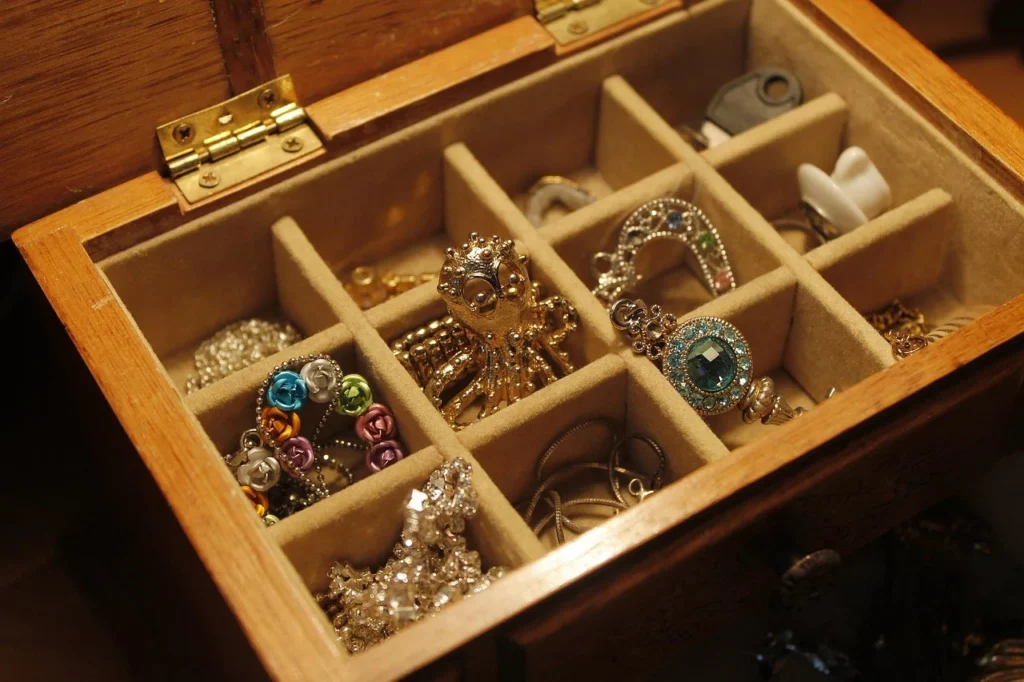
- Store separately: Store each gold vermeil item inside its own soft cloth bag or lined jewelry box slot to stop hard metal edges from scratching against one another.
Frequently asked questions
How long does gold vermeil last?
Gold vermeil lasts anywhere from several years to decades with proper care. Its gold coating measures at least 2.5 microns thick over sterling silver, resisting daily wear far better than basic plated jewelry.
Can I shower with gold vermeil?
You should not shower with gold vermeil jewelry. Water, soap residue, and harsh shower chemicals speed up the erosion of the outer gold layer and expose the silver core underneath over time.
Is gold vermeil real gold?
Yes, gold vermeil uses real karat gold (at least 10K fineness) for its outer layer. However, the inner core consists of 925 sterling silver, making it a high-quality layered piece rather than solid gold.