





Is Moissanite a Diamond? The Blunt Truth.
Imagine this: you’re eyeing a stunning engagement ring, the kind that catches the light and makes everyone do a double-take. The salesperson mentions it’s a moissanite. Your mind immediately jumps to, “Wait, is moissanite a diamond?” It’s a question that pops up more often than you’d think, and for good reason. These stones look incredibly similar, but the story behind them is quite different. Let’s cut through the confusion.
Last updated: April 22, 2026
The short, direct answer is no, moissanite isn’t a diamond. While it’s a natural gemstone composed of silicon carbide, and often created in labs to mimic the appearance of a diamond, it’s a distinct mineral with its own unique properties. Think of it like comparing a high-performance electric car to a powerful gasoline engine. both offer speed and excitement, but their core mechanics and origins are entirely separate.
What Exactly is Moissanite?
Moissanite is a fascinating mineral. It was first discovered in 1893 by French scientist Henri Moissan while examining a meteorite sample. Yes, you read that right – a celestial visitor! This original, natural moissanite is incredibly rare on Earth, making lab-created moissanite the standard for jewelry today. These lab-grown versions are chemically and structurally identical to their rare natural counterparts.
Chemically, moissanite is silicon carbide (SiC). Diamonds, But — are pure carbon (C). This fundamental difference in atomic structure is what gives each gem its unique characteristics, from hardness and brilliance to thermal conductivity. The brilliance, in particular, is a key differentiator many people notice.
The Sparkle Showdown: Moissanite vs. Diamond Brilliance
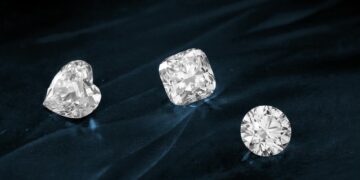
When people ask “is moissanite a diamond?” they’re often thinking about that dazzling sparkle. And this is where moissanite truly shines—sometimes, even more than a diamond! Moissanite possesses a higher refractive index (RI) than diamond. A diamond’s RI is around 2.42, while moissanite’s is about 2.65 to 2.69. This means moissanite bends and reflects light more intensely, resulting in a phenomenon known as “fire.”
This fire, the colorful flashes you see, is often more pronounced in moissanite. Some people adore this extra rainbow effect, finding it uniquely captivating. Others, especially diamond purists, might find it almost too flashy. Diamonds tend to exhibit a more balanced play of white light (brilliance) and colored light (fire), along with scintillation (the sparkle as the gem moves). According to the Gemological Institute of America (GIA) (2023), both diamonds and moissanite exhibit brilliance, but the optical properties lead to different visual experiences.
Hardness and Durability: Can Moissanite Stand Up to Life?
Durability is a major concern for engagement rings and everyday jewelry. Diamonds have long been the benchmark, ranking a perfect 10 on the Mohs scale of hardness. This means they’re incredibly resistant to scratching. So — where does moissanite fit in?
Moissanite comes in at a very respectable 9.25 on the Mohs scale. This makes it one of the hardest gemstones available, second only to diamond. For practical purposes, this means moissanite is exceptionally durable and suitable for daily wear. It’s highly resistant to scratches and abrasions, far more so than popular alternatives like cubic zirconia — which scores around 8 to 8.5. Many jewelers, like Brilliant Earth, highlight moissanite’s durability as a key selling point. So, while it’s not a diamond, it’s tough enough for almost anything life throws at it.
Color and Clarity: The Nuances
When assessing diamonds, color and clarity are critical factors influencing value. Diamonds are graded on a scale from D (colorless) to Z (light yellow or brown), and clarity from Flawless (FL) to Included (I).
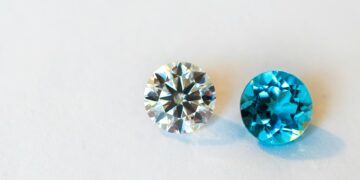
Moissanite, especially older or lower-quality lab-created versions, can sometimes exhibit a noticeable yellowish or brownish tint. However, modern advancements in technology mean that high-quality moissanite is often near-colorless, falling into the diamond color grading range of G to I. Some brands even offer “ice” or “supernova” moissanite that appears completely colorless (D-E-F range). Clarity in moissanite is also typically excellent, as lab creation allows for control over inclusions. According to research published by the Gemological Institute of America, intentional inclusions are sometimes added to moissanite to mimic the natural imperfections found in diamonds, but it’s generally easier to find eye-clean moissanite than eye-clean diamonds.
Is Moissanite a Diamond? The Value Proposition
Here’s where the comparison gets really interesting for consumers. If you’re asking “is moissanite a diamond?” and considering the financial aspect, the answer is a significant differentiator. Diamonds, especially those with high color and clarity grades, are expensive. Their price is influenced by rarity, mining costs, and market demand. A 1-carat, excellent-cut, colorless diamond can easily cost anywhere from $5,000 to over $15,000, depending on its specific characteristics.
Moissanite, by contrast, is more affordable. A 1-carat moissanite stone typically ranges from $300 to $800. This dramatic price difference makes moissanite an incredibly attractive option for those who want a large, beautiful, and durable stone for their engagement ring or other jewelry without the hefty price tag of a diamond. This accessibility allows more people to achieve their dream ring size and style.
Ethical Considerations: Is Moissanite a More Responsible Choice?
The conversation around “is moissanite a diamond?” also touches upon ethical sourcing. Diamond mining has historically faced scrutiny due to issues like conflict diamonds (blood diamonds) and environmental impact. While the Kimberley Process Certification Scheme has aimed to reduce the flow of conflict diamonds since its inception in 2003, concerns about mining practices and labor conditions persist. Organizations like Global Witness have documented ongoing issues.
Lab-created moissanite offers a compelling ethical alternative. Since it’s produced in controlled laboratory environments, it bypasses the complex supply chain and potential ethical pitfalls associated with mined diamonds. This makes it a popular choice for consumers prioritizing sustainability and ethical sourcing. Companies like Charles &. Colvard, a pioneer in moissanite jewelry, emphasize the traceable and conflict-free nature of their products.
Moissanite vs. Diamond: A Quick Comparison Table
| Feature | Diamond | Moissanite |
|---|---|---|
| Chemical Composition | Carbon (C) | Silicon Carbide (SiC) |
| Mohs Hardness | 10 | 9.25 |
| Refractive Index (RI) | ~2.42 | ~2.65-2.69 |
| Fire (Dispersion) | Moderate | High (more colorful flashes) |
| Brilliance (White Light Return) | Exceptional | Exceptional (often higher than diamond) |
| Origin | Natural (mined) or Lab-Grown | Natural (extremely rare) or Lab-Created |
| Price (approx. per 1ct) | $5,000 – $15,000+ | $300 – $800 |
| Thermal Conductivity | Very High | High (but lower than diamond) |
FAQs About Moissanite
Is moissanite a diamond?
No, moissanite isn’t a diamond. it’s a separate gemstone made of silicon carbide, whereas diamonds are made of carbon. While they share some visual similarities and are often used as alternatives in jewelry, they’re different minerals with distinct properties and origins.
Can a jeweler tell the difference between moissanite and diamond?
Yes, jewelers can easily distinguish between moissanite and diamond using specialized tools. While they look alike to the untrained eye, diamonds have higher thermal conductivity than moissanite. Diamond testers measure this property to differentiate them. Also, moissanite often exhibits more fire or rainbow sparkle than a typical diamond.
Does moissanite scratch easily?
Moissanite is very hard and durable, ranking 9.25 on the Mohs scale of hardness. This means it’s highly resistant to scratching and suitable for everyday wear. While diamonds are harder at 10 on the Mohs scale, moissanite is more scratch-resistant than most other gemstones and common diamond simulants like cubic zirconia.
Is moissanite worth anything?
Moissanite has a resale value, but it’s lower than that of a diamond. Its value is primarily tied to its cost of production and the brand name, rather than the rarity and market demand that drives diamond prices. While it’s an excellent value for personal wear, it’s not typically considered an investment stone in the same way a high-quality diamond might be.
What are the downsides of moissanite?
Some potential downsides include its tendency to show more fire (rainbow flashes) than a diamond — which some people find distracting. Older or lower-grade moissanite might also have a slight yellowish tint. Also, while durable, it’s not as hard as diamond, meaning it could theoretically be scratched by diamond itself. Its resale value is also considerably less than its purchase price.
So, Is Moissanite a Diamond? The Final Verdict
The answer to “is moissanite a diamond?” is a definitive no. But that doesn’t diminish its appeal. Moissanite is a beautiful, durable, and ethical gemstone that offers incredible sparkle at a fraction of the cost of a diamond. It’s an excellent choice for those who want a stunning piece of jewelry without compromising their budget or ethical values.
In the end, the choice between moissanite and diamond comes down to personal preference, priorities, and budget. If you’re drawn to its unique fiery brilliance, its affordability, and its ethical production, moissanite might just be the perfect stone for you. If you value the tradition, rarity, and specific optical properties of a diamond, then that remains a classic choice. Whichever you choose, make sure it’s a stone that makes you happy every time you look at it.
Editorial Note: This article was researched and written by the Anarchy Label editorial team. We fact-check our content and update it regularly. For questions or corrections, contact us.